


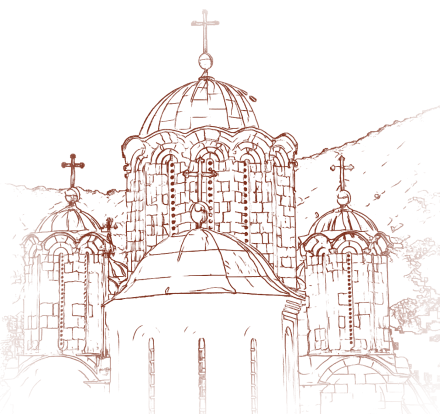
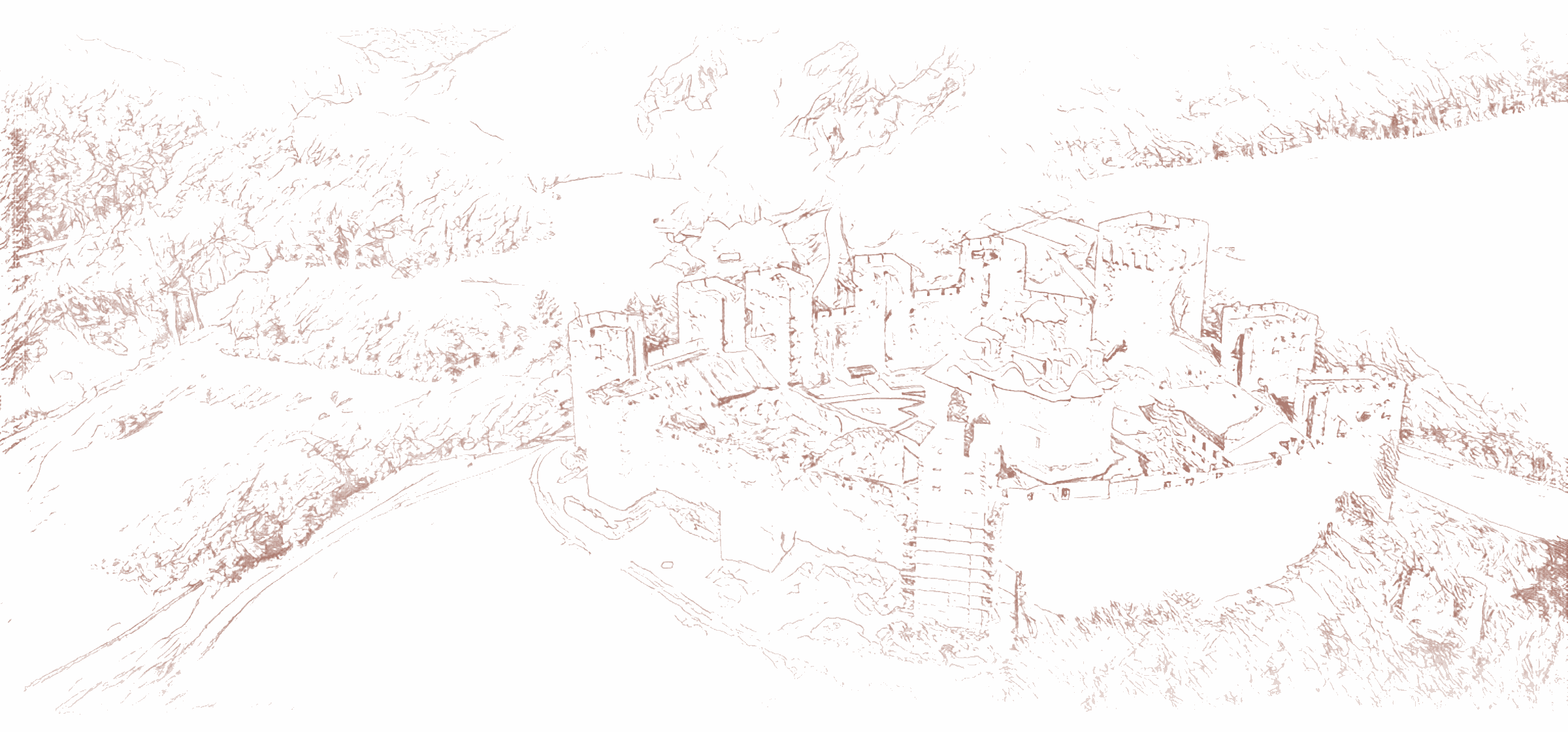
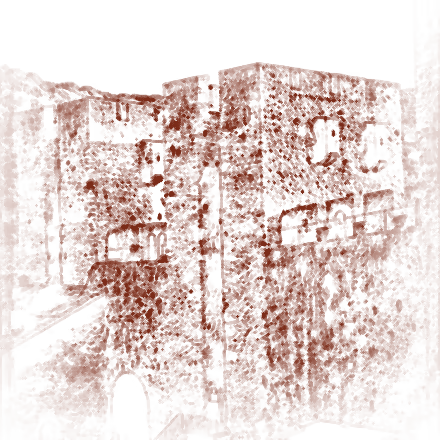
The English travel writer Andrew Archibald Paton (1811–1874), a British diplomat, orientalist and man of letters, visited Manasija Monastery at just about that time, in 1843 to be exact. In his description of Manasija Monastery he did not conceal his enthusiasm for the Resava fortress, of which he adds that it is worth the journey across all of Europe to Serbia, and for the Manasija church. From his notes we can surmise why the restorations of Manasija Monastery were so modest: we learn from him that the Manasija monks were dressed in torn and ragged cassocks. But in his impressions of Manasija Monastery the Briton also wrote that, despite the poverty of their monastery, his hosts were very hospitable and obliging, and we learn from him that, despite their poverty, books were not out of reach for the Resava monks - they read books and managed to follow secular literature as well, since they talked with their visitor, who had traveled from afar, about Robinson Crusoe, the novel by the British writer Daniel Defoe (1660–1731).80 To the monks of Manasija, Paton as a world traveler represented a Robinson Crusoe of their own day, since none of them, as Paton writes, had by their own admission ever traveled farther than Sirmium, that is, Sremska Mitrovica: their Resava hosts wished their English guest that on his journey he would never be in danger nor end up on a desert island like Crusoe, whom the Lord nevertheless delivered in the end and brought back to his homeland, his family and friends, and that almighty God would protect and preserve him on his journey and deliver him from every misfortune.81 Despite material want, the restoration of Manasija did not stand still. In this period, the authorities of the autonomous Serbian principality, which formally still remained part of the Ottoman Empire, managed to see to the preservation and protection of cultural monuments as well, taking particular care of Manasija Monastery.82 Through the engagement of Metropolitan Petar and the Ministry of Education during 1843 and 1844, under the patronage of Prince Aleksandar Karađorđević,83 work on the Manasija church was contracted in 1844. The master mason Nastas Stefanović and the masters Joseph Steinlechner and Johann Krieger with their journeymen carried out extensive work on the church itself during 1844, repairing among other things the façade, the domes, the roof and the vaults,84 while taking care of the wall painting, and especially of the image of Saint Despot Stefan, which the Ministry of Education also looked after; the Ministry - "since it is determined that the old painting in the churches is not to be touched" - ordered by a special note "that the image of Despot Stefan which is found in Manasija be preserved in its entirety, and wherever some repair by way of gluing should be necessary, that it be applied with the greatest care."85 It was planned that within the framework of this work the wall above the monastery gate, that is, above the entrance to the Resava fortress, would also be repaired, so that the stones falling out of the wall would not endanger anyone's safety.86 This restoration of 1844 saved the monastery church from further decay and - in the words of Stevan Tomić (1903–1992) - "made it possible for this cultural monument to survive to our own day."87
- Cf. Andrew Archibald Paton, Servia, Youngest Member of the European Family: Or, A Residence in Belgrade, and Travels in the Highlands and Woodlands of the Interior, During the Years 1843 and 1844. (London: Longman, Brown, Green, and Longmans, Paternoster Row, 1845), 246–249.
- Cf. Paton, Servia, Youngest Member of the European Family, 248.
- Cf. Stevan Tomić, "The Protection of Cultural Monuments in Serbia at the Beginning of the 19th Century" („Заштита споменика културе у Србији почетком XIX века"), Borba: Organ of the Socialist Alliance of the Working People of Yugoslavia, year XXVII, no. 359 [Belgrade edition] (Sunday, December 30, 1962): 15.
- Cf. I. E. [= Evgenije Simeonović], Description of Manasija Monastery, 16–17.
- Cf. Tomić, "Archival Documents on the Conservation and Restoration of Manasija Monastery in 1844," 15–26; Tomić and Nikolić, Manasija: History - Wall Painting, 34–38.
- Cf. Tomić and Nikolić, Manasija: History - Wall Painting, 38.
- Cf. Tomić and Nikolić, Manasija: History - Wall Painting, 38.
- Cf. Tomić and Nikolić, Manasija: History - Wall Painting, 41.