

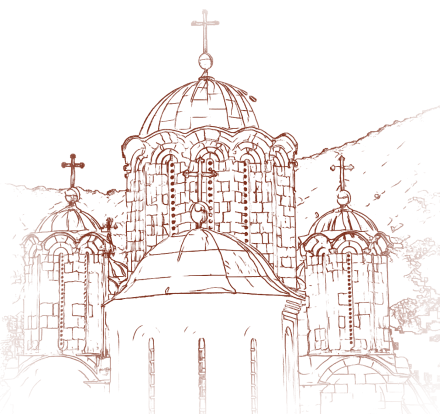
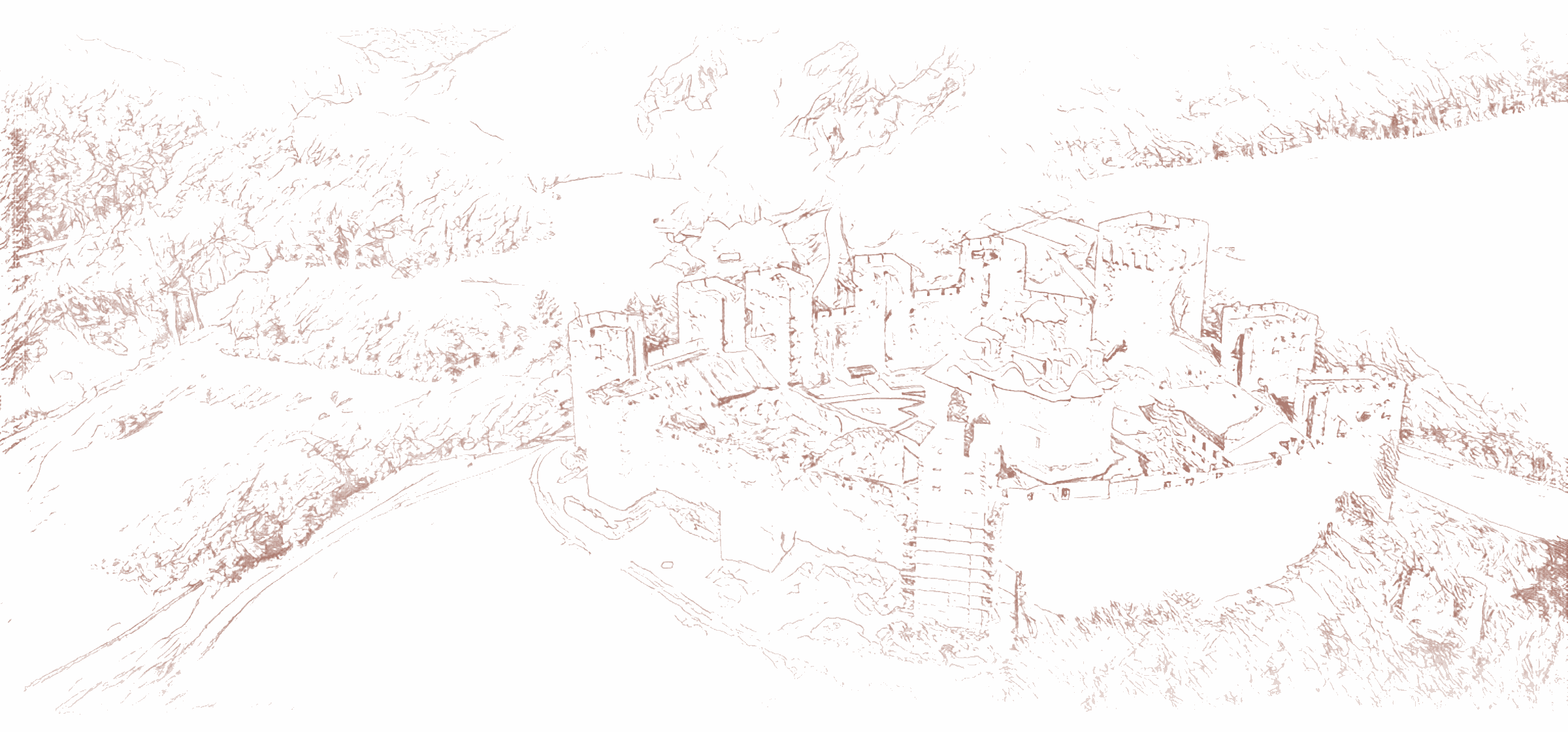
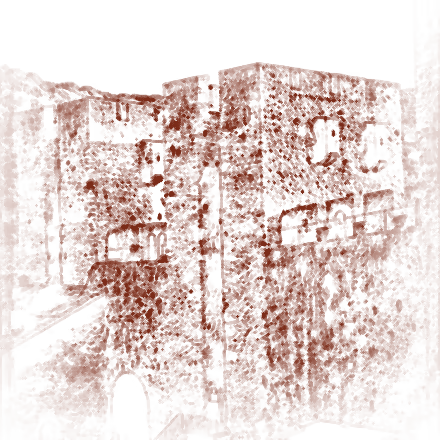
If it were possible to describe Manasija Monastery in a few words, it might be fitting to say that this monastery is a fortress of Orthodoxy. Like the stronghold that girds it, Manasija endured destruction and suffering, but it was restored and rose again. On the basis of the brief survey set out above, it is clear that during the first 400 years of its existence Manasija Monastery mostly found itself in extraordinary circumstances, and that over its first four centuries it was active only for very short periods: roughly from its founding, i.e., from 1407 or 1418, until somewhere around the beginning or middle of the second half of the 15th century, at the latest until 1476; after that it was active for a short period from about 1720 to 1739, and then again from 1806 to 1813, which altogether amounts to somewhat less than a hundred years in the most optimistic estimate, and in a more realistic one to somewhere around 75 years. From 1815 on, however, despite centuries of destruction, Manasija Monastery has maintained its continuity, and its history is easier to follow; a larger number of sources has survived, while the existing literature on this Serbian monastery is very extensive.74 The written testimonies show that the restoration of Manasija Monastery was a very demanding task. Records from the first half of the 19th century clearly indicate that the Resava monastery was in a half-ruined state, but that - paradoxically - even so it looked magnificent and left a powerful impression on those who saw it. Illustrative examples would be the brief notes of the Serbian linguist and writer Vuk Stefanović Karadžić (1787–1864) and of the Russian Slavist Izmail Ivanovich Sreznevsky (1812–1880), professor at the University of Kharkiv. Regardless of the unsightly state of the monastery in that period, Karadžić, in his description of Serbia published in 1827, says that the Turks themselves call the ruins of Manasija signs bearing witness that the Serbs once had emperors and kings.75 In a letter of October 17, 1841, Sreznevsky describes his stay in Manasija on that day, and records: "The sight is wondrous (поразительный). When you enter through the gate, your mind stands still even more: if the ruins are so vast and majestic, what must it have been like when it was new."76
- Cf., e.g., Branislav Todić, The Monastery of Resava, Biblioteka Nasleđe (Belgrade: "Draganić", 1995), 147– 148; Gordana Simić, Dragoljub Todorović, Marin Brmbolić and Radojka Zarić, The Monastery of Resava (Манастир Ресава), Popular Scholarly Monographs / Republic Institute for the Protection of Cultural Monuments, Belgrade, 50 (Belgrade: Republic Institute for the Protection of Cultural Monuments, 2007), 93–95; Prolović, Resava (Manasija), 455–517; Simić and Vukadinović, The Fortification of the Monastery of Resava, 249–254, and especially the proceedings of the annual scholarly conference in Despotovac devoted to Manasija and Despot Stefan, which under the title "Days of Serbian Spiritual Transfiguration" has been held continuously for several decades now; to date, more than
- Cf. Vuk Stefanović Karadžić, "Geographical and Statistical Description of Serbia" („Географическо-статистическо описаније Србије"), in: Danica: An Almanac for the Year 1827 (Даница: забавник за годину 1827)., published by Vuk Stef. Karadžić. Second year (Vienna: Printing House of the Armenian Monastery, 1827), 25–120: 110.
- Cf. Košutić, "Letters from Petrograd (Original Dispatches to the 'Pr. Glasnik')," 197.