

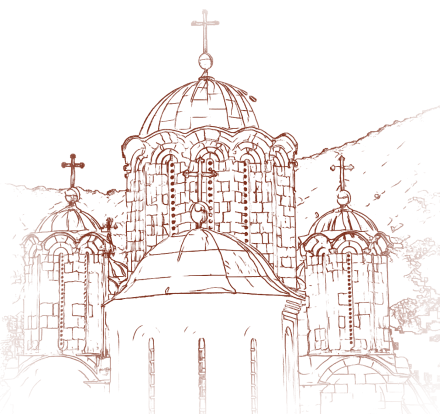
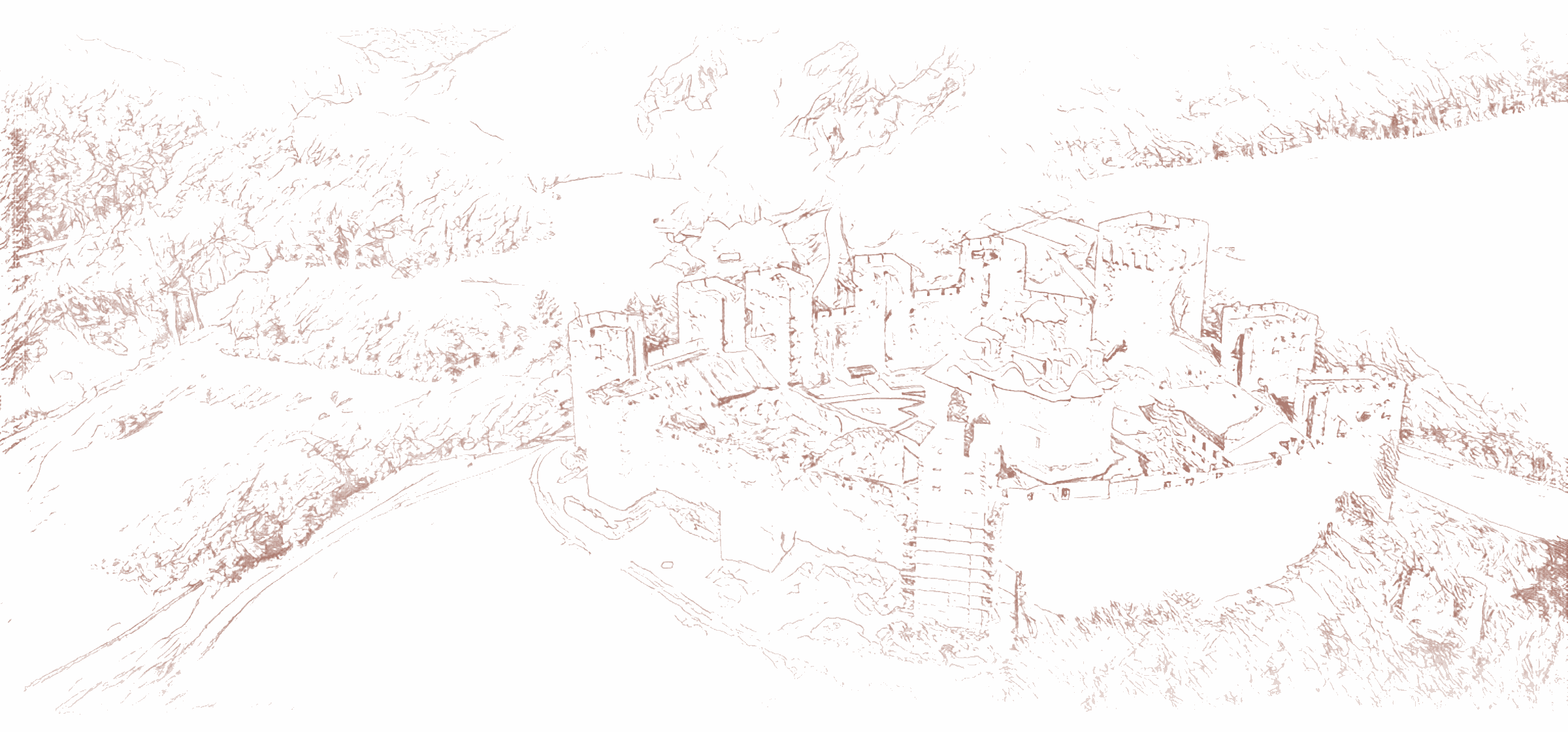
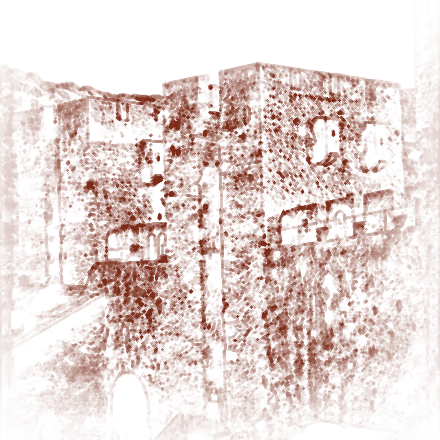
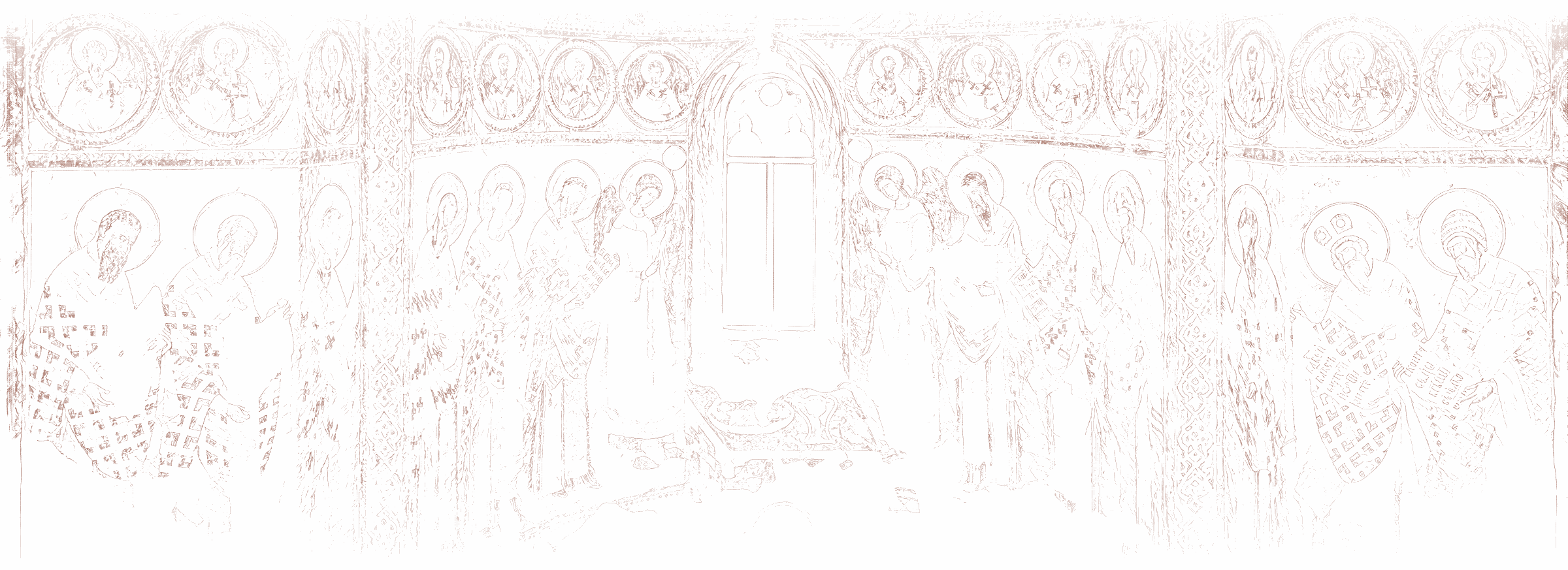
Manasija Monastery, also known by its older name Resava, stands on the right bank of the Resava River near Despotovac. This ancient monastery, founded some twenty years after the Battle of Kosovo, that is, at the beginning of the 15th century, is the endowment of Saint Despot Stefan Lazarević, son of the Serbian Saint Prince Lazar and Princess Milica. The construction of this monastery and church, which Despot Stefan raised as his burial place, began in 1406 or 1407 and was completed with the consecration of the monastery's Church of the Holy Trinity on Pentecost, that is, the feast of the Descent of the Holy Spirit upon the Apostles, May 15, 1418. Manasija is a unique masterpiece of Serbian medieval architecture and art. Conceived as a monumental whole and founded more than 600 years ago, girded by the monastery fortification and sheltered by high ramparts with towers, with the Church of the Holy Trinity as its epicenter, this monastery has withstood the centuries and still adorns Serbia today. Within the monastery Despot Stefan also built a refectory, monastic cells and other ancillary buildings, and he bequeathed to the monastery land and vineyards and endowed it with books, precious icons and liturgical vessels.
Manasija Monastery, also known by its older name Resava, stands on the right bank of the Resava River near Despotovac. This ancient monastery, founded some twenty years after the Battle of Kosovo, that is, at the beginning of the 15th century, is the endowment of Saint Despot Stefan Lazarević (1377–1427), son of the Serbian Saint Prince Lazar Hrebeljanović (c. 1329–1389) and Princess Milica (c. 1335–1405), known by her monastic name as Saint (J)Evgenija - Efrosinija.1 The construction of this monastery and church, which Despot Stefan raised as his own tomb, began in 1406 or 1407,2 and was completed with the consecration of the monastery's Church of the Holy Trinity on Pentecost, that is, the feast of the Descent of the Holy Spirit upon the Apostles, May 15, 1418, when it was consecrated by the Serbian Patriarch Kirilo I (1407–1419) together with a council of Serbian hierarchs and the spiritual fathers of the Serbian lands, in the presence of the Despot and the Serbian nobility, as we read in the Life of Despot Stefan [ŽDS 52].3 Besides this description of the magnificent consecration of the glorious monastery of Resava, other sources also testify that Manasija Monastery was conceived as a preeminent spiritual center, as is recorded in old Serbian manuscripts such as the Belgrade Chronicle I, which states that after the consecration the monastic brotherhood moved into "the new lavra of Resava, of the Holy Trinity" [SSRL 625б]. Manasija is a unique masterpiece of Serbian medieval architecture and art. Conceived as a monumental whole and founded more than 600 years ago, girded already at that time by the monastery fortification, sheltered by high ramparts with towers that still stand, with the Church of the Holy Trinity as its epicenter, this monastery has withstood the centuries and still adorns Serbia today. Within the monastery Despot Stefan also built a refectory, monastic cells and other ancillary buildings, and he bequeathed to the monastery land and vineyards, endowed it with books, precious icons and costly liturgical vessels, vestments and vigil lamps, furnishing it so that the monastery of Resava surpassed the great lavras of Mount Athos in its adornment, as is written in the Despot's Life [ŽDS 52]. The monumentality of the monastery's fortification walls and towers on the one hand,4 and the architecture and painting of the Church of the Holy Trinity on the other,5 bear witness to the building achievements of the Serbian Middle Ages and to the high culture cultivated in the Serbian Despotate at the time Manasija was created.
- On the significance and place of the members of this holy family in Serbian history, see: Ivan Božić and Vojislav J. Đurić (eds.), On Prince Lazar: Scholarly Conference in Kruševac, 1971 (О кнезу Лазару: научни скуп у Крушевцу, 1971). (Belgrade: Faculty of Philosophy, Department of Art History; Kruševac: National Museum Kruševac, 1975); Rade Mihaljčić, Lazar Hrebeljanović: History, Cult, Tradition (Лазар Хребељановић: историја, култ, предање), 2nd edition (Belgrade: Beogradski izdavačko-grafički zavod, 1989) (on Prince Lazar); Siniša Mišić and Dejan Ječmenica (eds.), Princess Milica - the Nun Jevgenija and Her Age: Thematic Collection of Papers from the Scholarly Symposium Held on September 12, 2014, at the Monastery of Ljubostinja (Кнегиња Милица - монахиња Јевгенија и њено доба: тематски зборник радова са научног симпозијума одржаног 12. септембра 2014. године у Манастиру Љубостињи) (Trstenik: Narodni univerzitet Trstenik - Narodna biblioteka "Jefimija"; Belgrade: Faculty of Philosophy, Center for Historical Geography and Historical Demography, 2014); Marko Šuica, Milica - Princess of a Turbulent Age (Милица - кнегиња немирног доба), Biblioteka "Polihistor", vol. 26 (Belgrade: Evoluta, 2019) (on Princess Milica); Mat[ija]. Stanojlović and Mil[oje]. J. Gajić, Despot Stefan Lazarević: A Historical Treatise (Деспот Стефан Лазаревић: историјска расправа) (Belgrade: Published by the Municipality of Belgrade, 1894); Mil[enko]. M. Vukićević, The Time of Despot Stevan (from 1389 to 1427) (Време Деспота Стевана (од 1389. до 1427. године)), Lectures for the People / Matica srpska, issues 5–6 (Novi Sad: Matica srpska, 1925); Nadežda D. Pavlović, Despot Stefan Lazarević, Biblioteka "Buktinja", knj. 5 (Subotica - Beograd: Minerva, 1968); Miodrag Al. Purković, Prince and Despot Stefan Lazarević (Кнез и Деспот Стефан Лазаревић) (Belgrade: Holy Synod of Bishops of the Serbian Orthodox Church, 1978); Vukašin Stanisavljević, Despot Stefan Lazarević (Деспот Стефан Лазаревић), Biblioteka "Srpski istočnici", vol. 6 (Belgrade: Zavod za udžbenike i nastavna sredstva, 1994); Željko Fajfrić, Prince Lazar and Despot Stefan (Lazarević) (Кнез Лазар и Деспот Стефан (Лазаревић)) (Šid: Grafosrem, 1998); Krsman Milošević, The Spiritual Ascent of Serbia: Despot Stefan the Tall (Духовни узлет Србије: Деспот Стефан Високи) (Arilje: Narodna biblioteka, 2013); Nadežda D. Pavlović, Despot Stefan Lazarević (Деспот Стефан Лазаревић) (Belgrade: Centar za izučavanje tradicije "Ukronija", 2018); Vladimir Dobrosavljević, Stefan Lazarević: Warrior and Ruler (Стефан Лазаревић: ратник и владар) (Belgrade: Poredak, 2020); Nikola Ilić, The Church Policy of the Serbian Prince and Despot Stefan Lazarević (Црквена политика српског кнеза и деспота Стефана Лазаревића) (Belgrade: Čigoja štampa - N. Ilić, 2024) (on Despot Stefan).
- Cf. Đorđe Trifunović (ed.), Despot Stefan Lazarević: Literary Works (Деспот Стефан Лазаревић: књижевни радови), Srpska književna zadruga, series 72, vol. 477 (Belgrade: Srpska književna zadruga, 1979), 79; Aleksandar Mladenović, The Charters and Letters of Despot Stefan: Text, Commentary, Facsimiles (Повеље и писма Деспота Стефана: текст, коментари, снимци), Edicija "Povelje" (Belgrade: Čigoja štampa, 2007), 386.
- There are several editions of the text of the Life of Despot Stefan; see Andrey Popov, A Miscellany of Slavonic and Russian Works and Articles Included in the Chronographs of the Russian Redaction. Collected and Published by Andrey Popov (Изборникъ славянскихъ и русскихъ сочиненiй и статей, внесенныхъ въ хронографы русской редакцiи) (Moscow: Tipografiya A. I. Mamontova i Ko., 1869), 92–130; J. Šafarik, "The Life of Despot Stefan Lazarević, Grand Prince of Serbia. Prepared for Print from the Odessa Manuscript by Dr. J. Šafarik" („Живот Деспота Стефана Лазаревића, великог кнеза српског"), Glasnik of the Serbian Learned Society, vol. XI, no. XXVIII of the old series (1870): 363–428; Kuyo Kuev, The Life of Stefan Lazarević by Constantine of Kostenets. The Kirillo-Belozersky Copy (Житието на Стефан Лазаревич от Константин Костенечки. Кирилобелозерски препис) (Sofia: Nauka i izkustvo, 1983); Kuyo Kuev and Georgi Petkov, Collected Works of Constantine of Kostenets. Study and Text (Събрани съчинения на Константин Костенечки. Изследване и текст) (Sofia: Bulgarian Academy of Sciences, 1986), 314–515. For the text of the original in Serbian Church Slavonic, accepted in Serbian scholarship as authoritative, see: Vatroslav Jagić, "Constantine the Philosopher and His Life of Stefan Lazarević, Despot of Serbia: Newly Edited from Two Serbian Church Slavonic Manuscripts by V. Jagić" („Константин Философ и његов Живот Стефана Лазаревића деспота српскога"), Glasnik of the Serbian Learned Society, vol. XLII (1875): 223–328, 372–377; Đorđe Trifunović (ed.), Constantine the Philosopher and His Life of Stefan Lazarević (Константин Философ и његов Живот Стефана Лазаревића). Reprinted Editions, vol. 6 (Gornji Milanovac: Lio, 2004). For a translation of this Life into modern Serbian based on Jagić's edition, see the translation by Lazar Mirković in: [Lazar Mirković], Old Serbian Biographies of the 15th and 17th Centuries - Camblak, Constantine, Pajsije (Старе српске биографије XV и XVII века - Цамблак, Константин, Пајсије). Translated by Dr. Lazar Mirković, with a foreword by Pavle Popović. Srpska književna zadruga, series 39, vol. 265. Second book of the Slobodan J. Jovanović Fund (Belgrade: Srpska književna zadruga, 1936), 41– 126. For the revised translation by Gordana Jovanović, see: Gordana Jovanović (ed.), Constantine the Philosopher, The Tale of the Letters (Skazanije o pismeneh) - The Life of Despot Stefan Lazarević (Константин Филозоф, Повест о словима (Сказаније о писменех) - Житије деспота Стефана Лазаревића). Old Serbian Literature in 24 Volumes, vol. 11; translated by Gordana Jovanović and Lazar Mirković (Belgrade: Prosveta - Srpska književna zadruga, 1989), 71–130; Gordana Jovanović, Constantine the Philosopher. The Life of Stefan Lazarević, Despot of Serbia (Константин Философ. Живот Стефана Лазаревића, деспота српскога). Translation and notes by Gordana Jovanović. Biblioteka "Književnost i jezik", vol. 17 (Belgrade: Društvo za srpski jezik i književnost Srbije, 2007); Gordana Jovanović, Constantine the Philosopher, The Life of Stefan Lazarević, Despot of Serbia. Translation and notes by Gordana Jovanović. Biblioteka "Izvori srpskog bogoslovlja", vol. 2 (Belgrade: Publishing Fund of the Serbian Orthodox Church Archdiocese of Belgrade and Karlovci, 2009).
- On the Resava fortress, see: Gordana Simić and Svetlana Vukadinović, The Fortification of the Monastery of Resava: From Conception to Realization (Утврђење манастира Ресаве: од замисли до остварења). Studies and Monographs / Republic Institute for the Protection of Cultural Monuments, Belgrade, vol. 18 (Belgrade: Republic Institute for the Protection of Cultural Monuments, 2018).
- On the architecture and wall painting of the Resava Church of the Holy Trinity, see: Stanoje Stanojević, Lazar Mirković, and Đurđe Bošković, Manasija Monastery (Манастир Манасија). Serbian Monuments, vol. V (Belgrade: National Museum in Belgrade, 1928), 23–56; Aleksandar Deroko, Monumental and Decorative Architecture in Medieval Serbia (Монументална и декоративна архитектура у средњевековној Србији) (Belgrade: Naučna knjiga, 1953), 241–242; Stevan Tomić and Radomir Nikolić (eds.), Manasija: History - Wall Painting (Манасија: историја - живопис). Republic Institute for the Protection of Cultural Monuments, Belgrade - Saopštenja VI (Belgrade: Republic Institute for the Protection of Cultural Monuments, 1964), 47–96; Branislav Todić, The Monastery of Resava (Манастир Ресава), Biblioteka Nasleđe (Belgrade: "Draganić", 1995); Jadranka Prolović, Resava (Manasija). Geschichte, Architektur und Malerei einer Stiftung des serbischen Despoten Stefan Lazarević, Denkschriften / Österreichische Akademie der Wissenschaften, Philosophisch-historische Klasse, Bd. 484 (Wien: Verlag der Österreichischen Akademie der Wissenschaften, 2017).