

Saint Despot · 1377 – 1427
Despot Stefan Lazarević
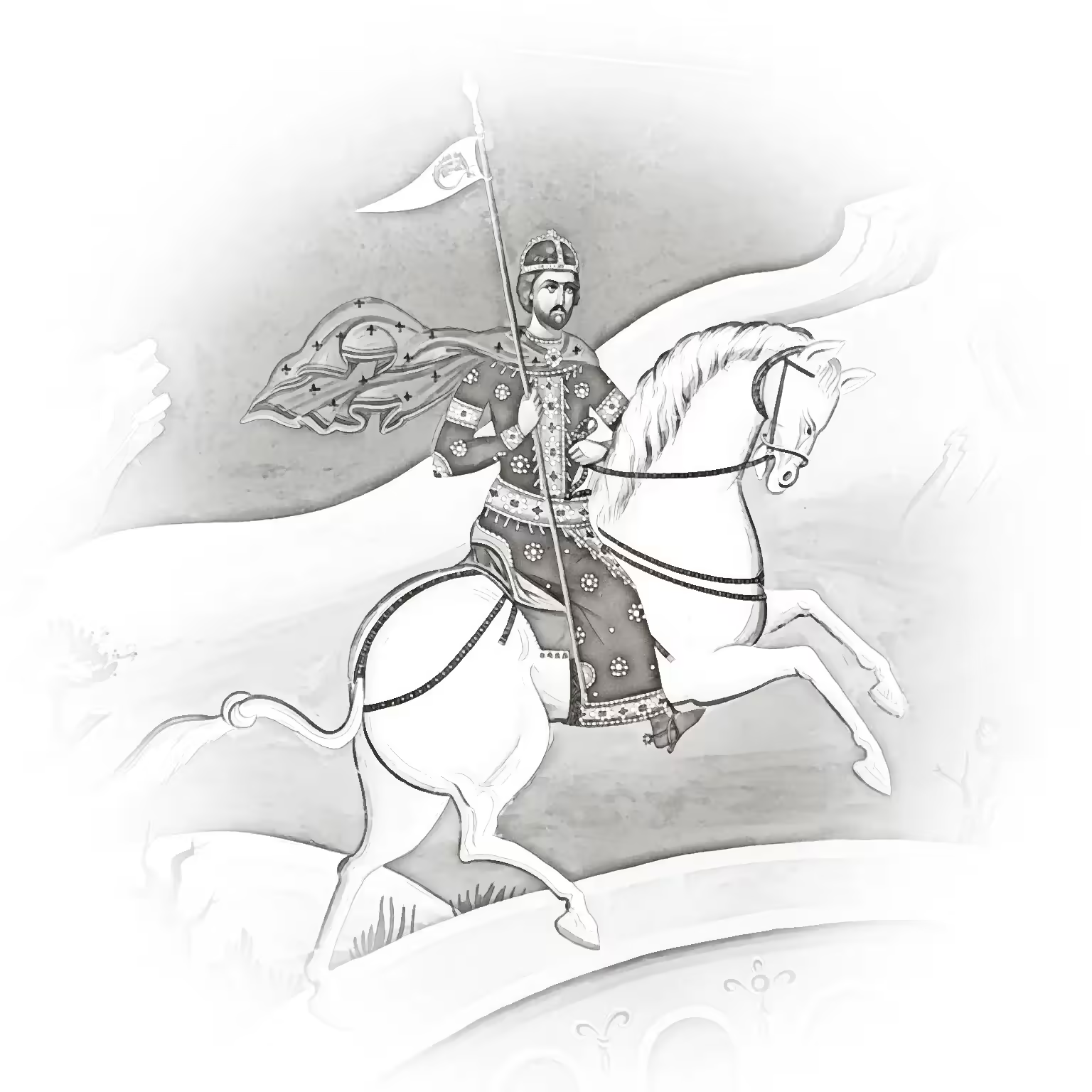
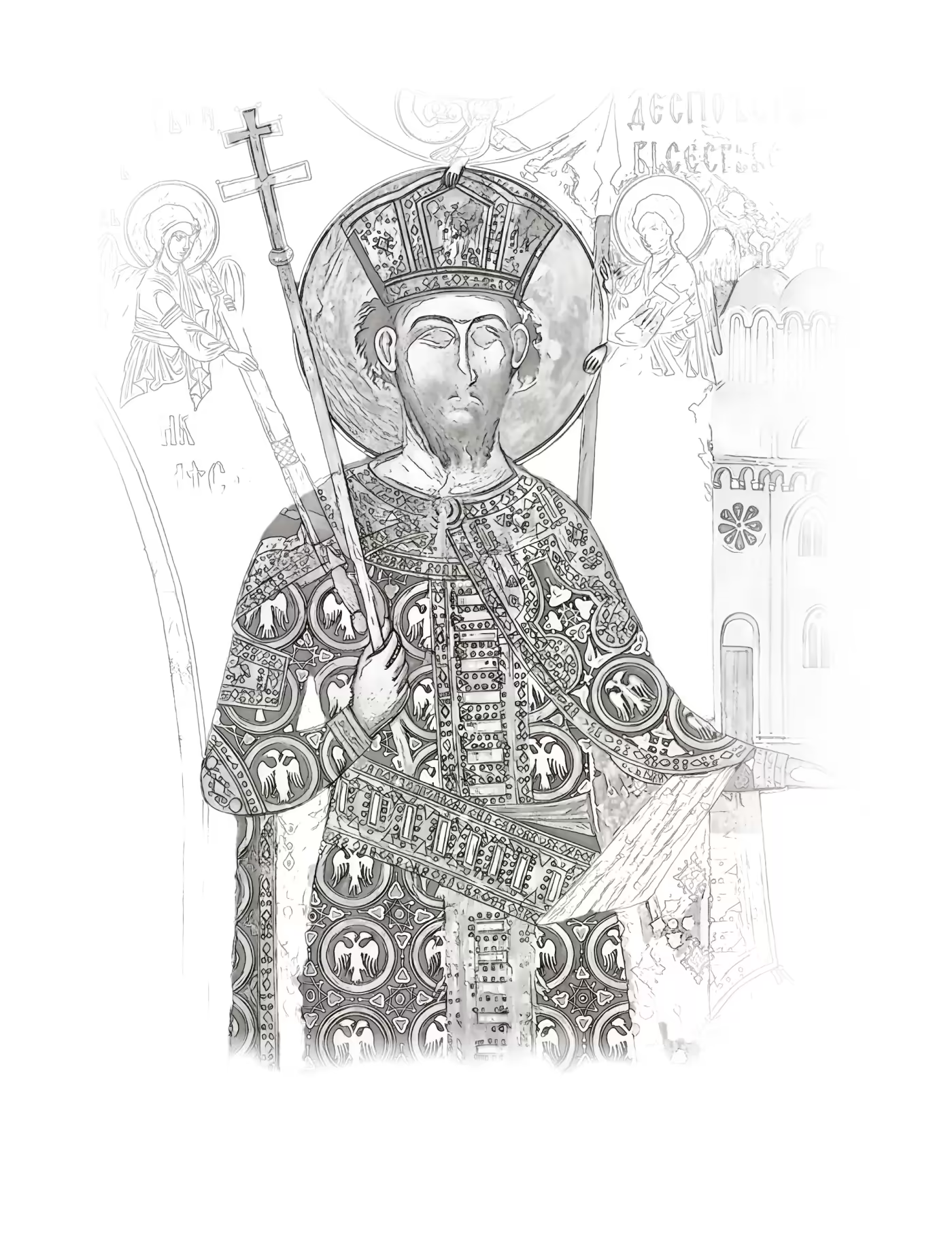
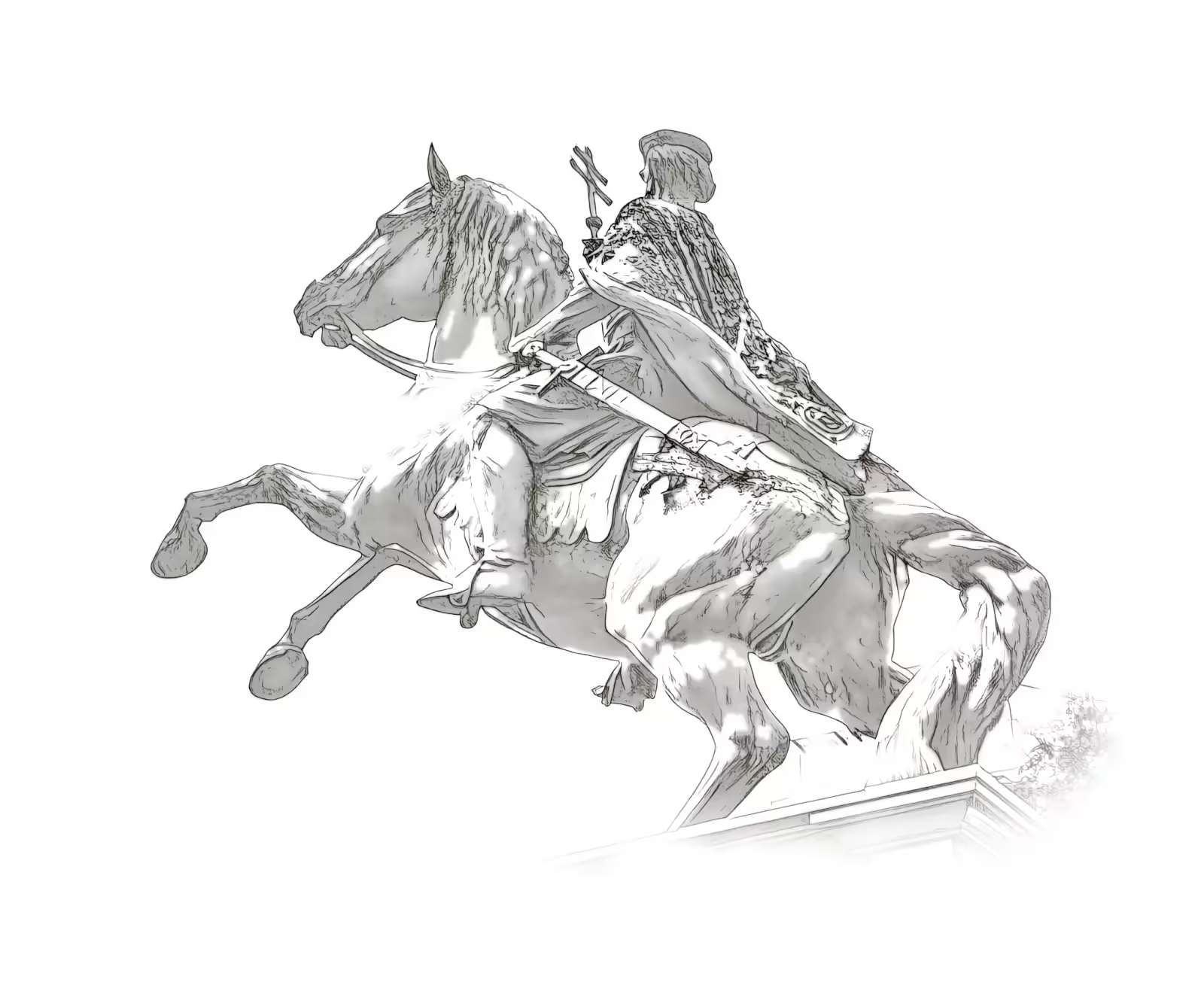
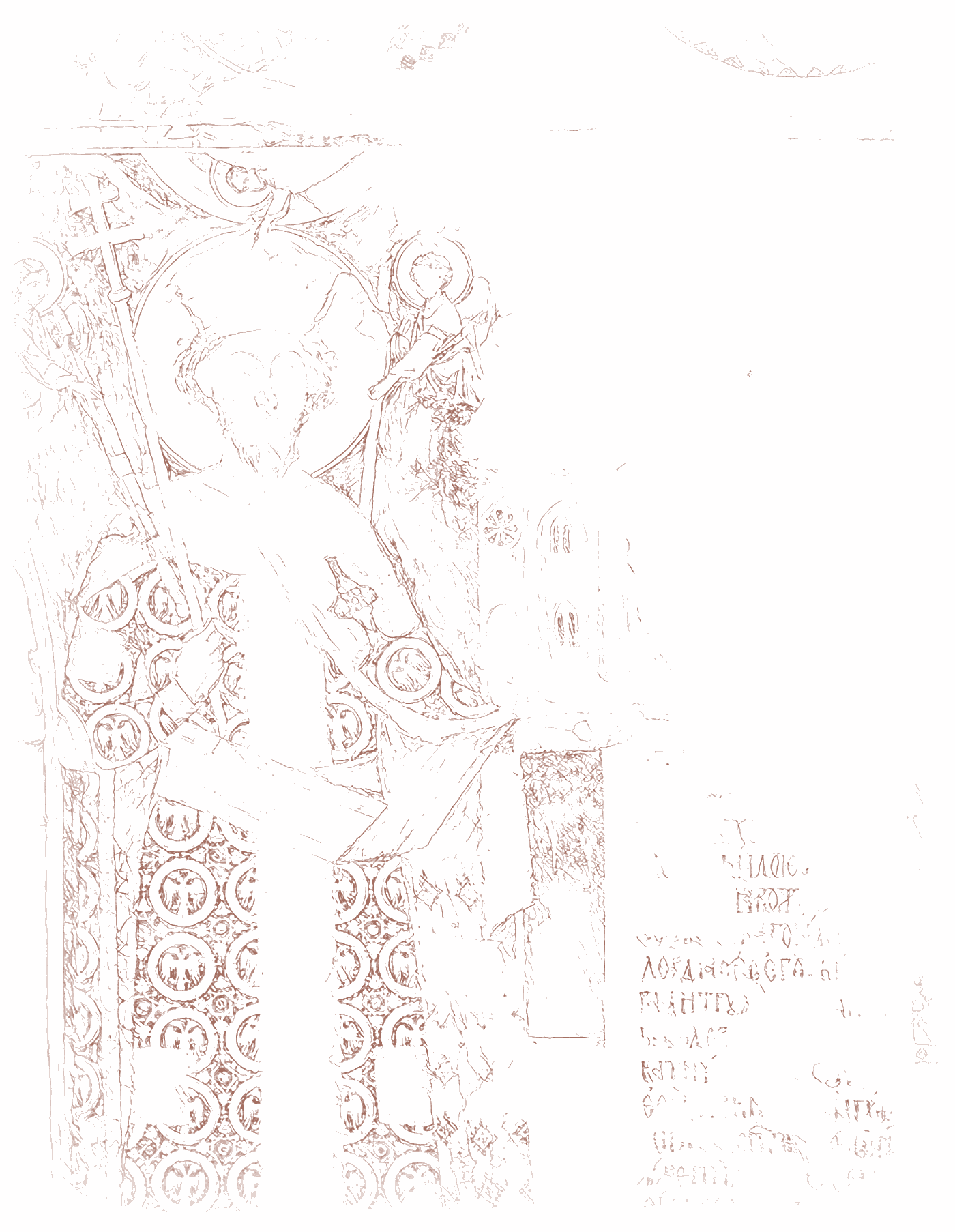
Saint Despot Stefan Lazarević, also known as Stefan the Tall, was the son of Prince Lazar and Princess Milica and the founder of Manasija Monastery. An outstanding military commander, statesman, diplomat, writer and poet, he managed to preserve his people through difficult times. In the memory of the Church and the people he is remembered as a friend of God - the Holy Despot.
FOUNDER OF MANASIJAThe Life
The life of the Holy Despot, after the Life by Constantine the Philosopher and other sources
I · 1377 – 1402
Son of the Prince of Kosovo
Stefan was born in Kruševac in 1377, the son of Prince Lazar and Princess Milica. He was twelve years old when his father fell in the Battle of Kosovo, on St. Vitus' Day (Vidovdan) 1389, and until he came of age the state was governed by his mother.
After Kosovo, Serbia had to pay tribute to the sultan and send him auxiliary troops. As an Ottoman vassal, Stefan fought at Rovine, at Nicopolis and in the Battle of Ankara in 1402, where he showed exceptional courage. Soon afterward, through his envoy Ajdin, he also secured the release of his sister Olivera, Bayezid's wife, whom Tamerlane had held captive after the battle.
“I will build a greater and more beautiful one.”
- the boy Stefan, looking at the church his father had built
He returns from Constantinople as despot
II · 1402 – 1413
The Despot and Belgrade
After Ankara, in 1402, Stefan arrived in Constantinople, where Emperor John VII Palaiologos conferred on him the dignity of despot - one of the highest titles of the Byzantine world at the time. That same year, at Gračanica, he defeated Đurađ Branković and the Turks in battle.
In alliance with King Sigismund of Hungary he received Belgrade, rebuilt it and made it the capital of the Serbian Despotate.
He also set the state in order by law: on January 29, 1412, at Nekudim, he confirmed the Mining Law for Novo Brdo, drawn up by twenty-four “good men.” The following year, 1413, in the battle below Vitoša, in which the Despot's army played a decisive role, Bayezid's son Musa was defeated.
- 1402
- Title of despot, in Constantinople
- Belgrade
- New capital of the Despotate
- 1412
- The Mining Law
“Look, look at Lazar's son!”
- the Turks at Gračanica, on seeing Stefan in battle
With the sword, but also with the pen
III · late 14th – early 15th century
The Homily on Love
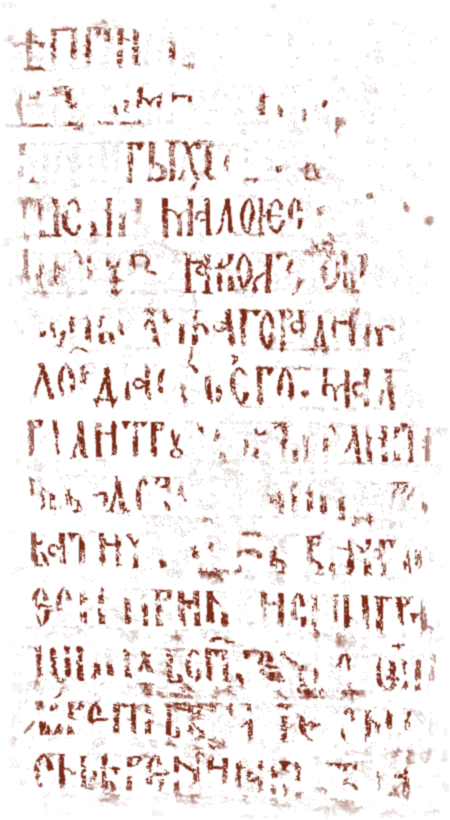
Despot Stefan was not only a military commander and a statesman, but also a writer. His Homily on Love (Slovo ljubve), written around 1409 and most likely addressed to his brother Vuk, is a poem of brotherly and divine love, composed as an acrostic. The original manuscript, which Đura Daničić considered the Despot's autograph, was destroyed in the bombing of Belgrade on April 6, 1941; the text survives in a copy from the middle of the 15th century.
Also attributed to him are the inscription on the marble pillar at Kosovo and the “Funeral Lament for Prince Lazar,” preserved in a fragment, as well as the translation of the treatise “On the Times to Come.”
From the “Homily on Love”
All this, however,
and the other wondrous works of God,
which not even the keenest mind
is able to behold,
love surpasses.Keen, somehow, and swiftly flowing
is the work of love,
it surpasses every virtue.
And above all - his endowment
IV · 1406 – 1418
The Founder
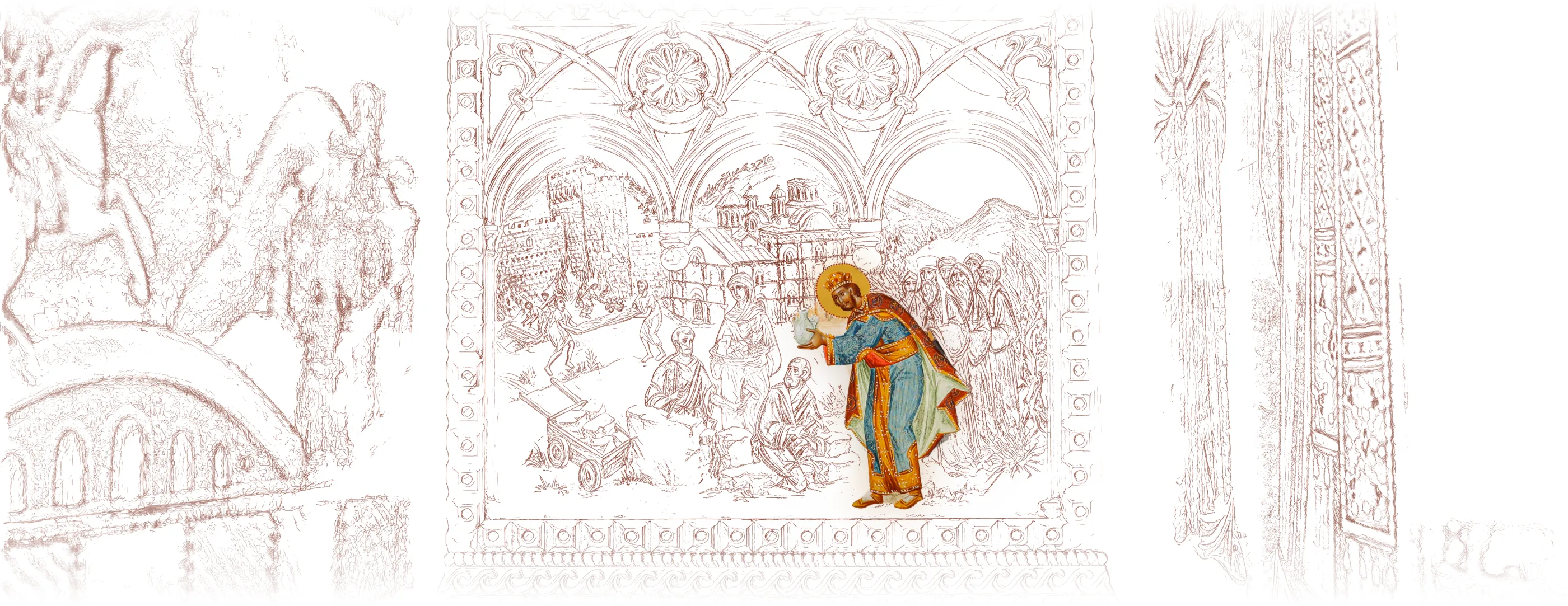
In 1406 or 1407 the Despot began to build Manasija, a quiet abode into which he gathered “from all sides very wise and outstanding monks.” There, in his endowment, he also prepared a tomb for himself.
He endowed the monastery with villages and vineyards throughout his land and confirmed them with a charter, which has not survived, and he gave it liturgical books and precious icons adorned with pearls and gold. The Church of the Holy Trinity was consecrated at Pentecost, on May 15, 1418.
“And the dark clouds parted, and the sun shone upon us.”
- from the Despot's charter to Hilandar
Charters
Gifts to Holy Places
The Despot also endowed many other monasteries - on Mount Athos, in Serbia and in Wallachia.
- 1406 · 1411HilandarOne hundred litras of silver a year from Novo Brdo, and later villages near Novo Brdo and in Levač.Charters
- 1407 · 1427Great LavraFour villages, with a yearly commemoration; toward the end of his life, also two silver-gilt candlesticks.Charters
- 1417VatopediSixty litras of silver a year from the Novo Brdo customs, and the village of Koprivnica.Charter
- 1395RossikonTogether with his mother and his brother Vuk - villages and five hundred cakes of salt a year.Charter
- 1414/15MileševaFive villages in Moravice, in gratitude that God, through the prayers of Saint Simeon and Saint Sava, had granted him life a second time.Charter
- 1406Tismana and VodițaHe restores nine villages near the lower Pek to the Wallachian monasteries.Charter
A ruler who thought of those who would come after him
V · 1424 – 1427
“Send for Đurađ, send for Đurađ”
Having no heir, the Despot saw to it, at the council in Srebrnica below Rudnik in 1424 or 1425, that the state would pass to his nephew Đurađ Branković.
He reposed on July 19, 1427, at Glavica. He had set out to hunt when he began to sway on his horse; his companions caught him from both sides and led him to a tent, where he said only once: “Send for Đurađ, send for Đurađ!” Until morning he said nothing more, and then he gave up his spirit to the Lord.
His body was carried to Resava and laid in his endowment, “on the right side of the entrance into the church.” At the place where he died, Đurađ Zubrović raised a marble cenotaph, which today stands in the churchyard of the Church of the Holy Prophet Elijah in Markovac near Mladenovac.
“Weep again, O Belgrade, over the darkness!
The leader of the people, like a flower, has withered and fallen.”
The people did not forget him
VI · 1427 – today
The Holy Despot
Even in his lifetime the Despot was revered as a man of exceptional spiritual qualities: the monk Jefrem wrote a Canon of Supplication for him, praising him as the ideal ruler. Around 1431 Constantine the Philosopher composed his Life, and before his official canonization the people would bring the sick to the church at Manasija, to the place where the Despot's grave was believed to be.
Patriarch Dimitrije proclaimed him a saint at the vigil of July 19, 1927. The grave of the Holy Despot was discovered in 2006 in the nave, by the south wall of the western bay, and his relics now rest in a reliquary in the Church of the Holy Trinity.
- c. 1431
- The Life, by Constantine the Philosopher
- 1927
- Proclaimed a saint
- 2006
- Grave found at Manasija
Read Further
Literature on the Holy Despot on our site
- The Life and Deeds of Despot StefanConstantine the Philosopher, c. 1431
- The Life of Saint Stefan the TallSaint Justin Popović
- Founder of Manasija MonasterySaint Despot Stefan Lazarević
- The Homily on LoveA poem by Despot Stefan
- The Mining LawFor the mines of Novo Brdo, 1412
- Where Was Despot Stefan Buried?The grave and the relics