


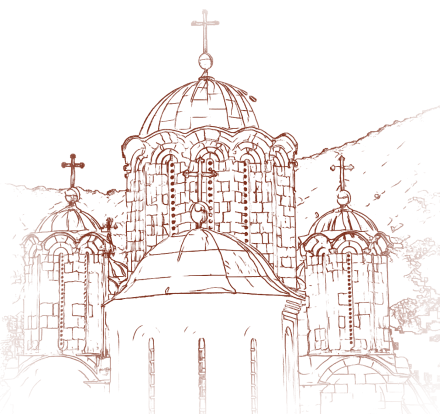
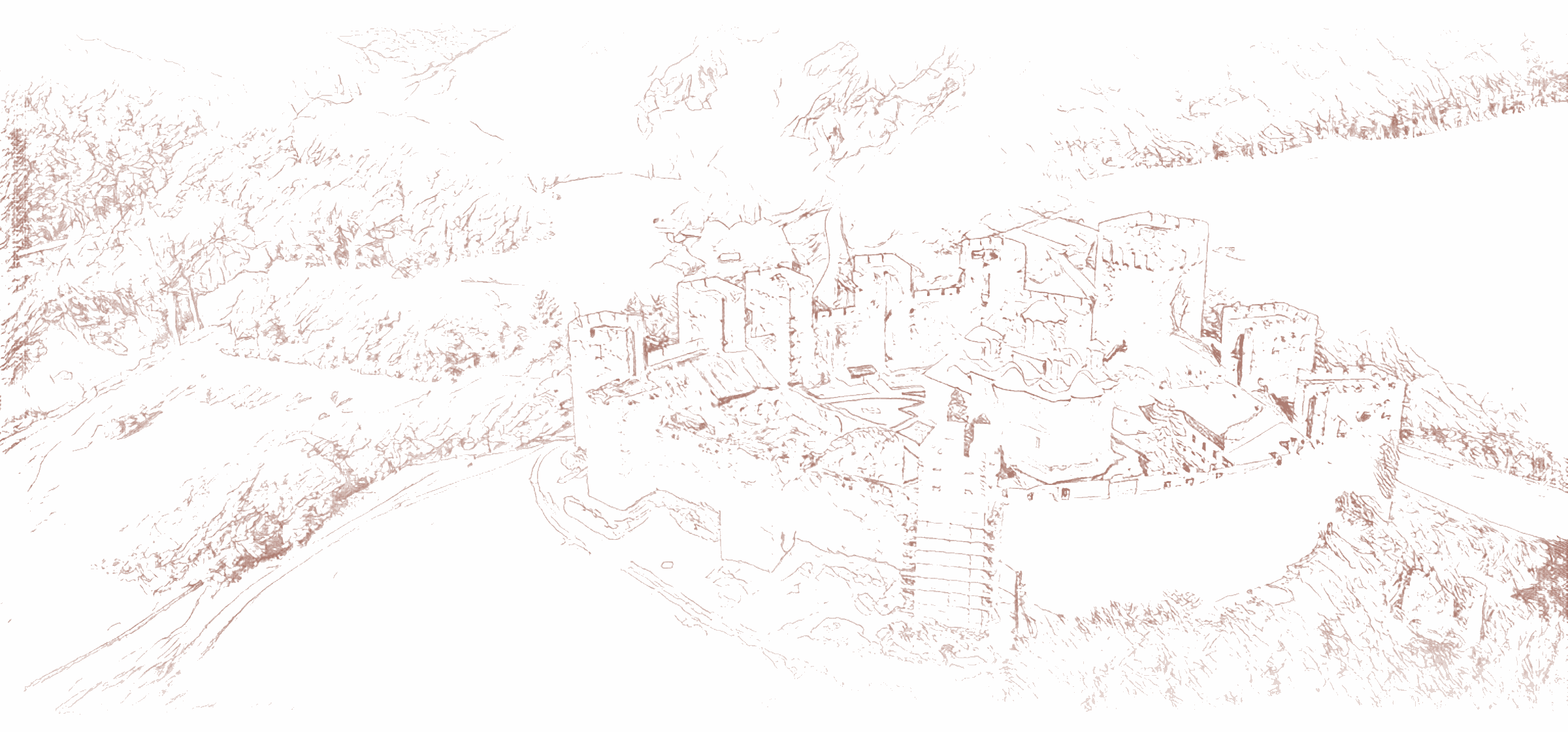
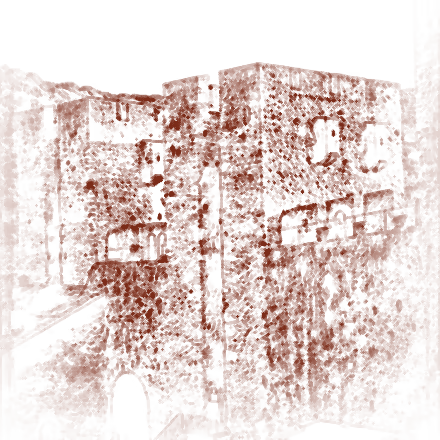
With God's help, monastic life in Manasija Monastery was renewed at the beginning of the 19th century, and this holy place itself was gradually restored as well. The 19th-century restorations of Manasija mentioned above, although significant and although they saved the monastery from decay, were nevertheless not complete but partial. In the Manasija complex it was necessary to restore other buildings as well, first of all to provide living quarters, and it was also necessary to furnish the monastery with all the things needed for monastic life. From travel notes of the mid-19th century we learn that the Manasija monks lived very modestly, and that there were not many of them. The German mining engineer Wilhelm Richter (?) visited Manasija in 1839 and, admiring the Manasija fortress, wrote that the old holy place was inhabited by only two monks.88 But the monastery was alive, and the situation was changing rapidly. In the literature one finds mentions of various Manasija monks from the middle of the 19th century: besides the abbots already mentioned, the Manasija community in this period also included the hieromonk Grigorije Stojanović (superior of the Miljkovo monastery, who moved to Manasija in the autumn of 1837),89 as well as the widowed priest Zdravko Simić from Grnčarica (likewise enrolled in the Manasija brotherhood in the autumn of 1837),90 who took the name Zosim in monasticism,91 the hieromonk Pantelejmon Popović (c. 1796–1868; a native of Gložani; in Manasija in 1848;92 transferred from Manasija to the Miljkovo monastery in 1852 or 1853; later abbot of the Miljkovo monastery),93 the hieromonk Mihailo (transferred from the Miljkovo monastery to Manasija in 1852),94 the hieromonks Simeon Popović and Mihailo Miljković, who are mentioned in 1853,95 the hieromonks Mihailo, Genadije and Kiril, who are mentioned in the official data for 1854, and also for 1855 and 1856,96 in 1857 the hieromonks Kiril, Mihailo and Evstratije,97 in 1858 and 1859 the hieromonks Kiril and Mihailo, as well as the monk Julijan, while together with Father Pantelejmon in the Manasija metochion, the Miljkovo monastery, the hieromonk Timotej is mentioned in 1858,98 the hieromonks Kiril, Mihail and Gerasim in 1860 and 1861,99 and other monks; unfortunately, the history of Manasija Monastery is to a great extent unknown, and the names of the Manasija monks have not yet been systematically researched and listed, so that many of them remain unknown to us. But some information about the monastery from this period is known from the literature. The first artistic depictions and drawings of Manasija Monastery have survived from the middle of the 19th century. The painter and writer Dimitrije Avramović (1815–1855) drew the Resava fortress in 1846, showing the appearance of the fortification from the west side.100 In the same year, Janko Šafarik (1814–1876) published three drawings of Manasija Monastery.101
- Cf. Wilhelm Richter, Serbiens Zustände unter dem Fürsten Milosch bis zu dessen Regierungs-Entsagung im Jahre 1839: eine Darstellung der jüngsten Ereignisse, Charakteristik des serbischen Volkes und Abriss einer Topographie des Fürstenthums (Leipzig: Adolf Frohberger, 1840), 68–69; cf. also Vilhelm Rihter, Conditions in Serbia under Prince Miloš until His Abdication in 1839: An Account of the Latest Events, a Characterization of the Serbian People and a Topographical Sketch of the Principality (Прилике у Србији под кнезом Милошем до његове абдикације 1839. године), translated from the German by Dušan Nikolić; review, afterword and editing by Živomir Spasić (Kragujevac: Svetlost, 1984), 65.
- Cf. Dumić and Đokić, Pearls Scattered by the Morava, or the Miljkovo Monastery, 46–47.
- Cf. Dumić and Đokić, Pearls Scattered by the Morava, or the Miljkovo Monastery, 47.
- Cf. Dumić and Đokić, Pearls Scattered by the Morava, or the Miljkovo Monastery, 52.
- Cf. Darko Ivanović, "The Monasticism of the Morava-Resava Monasteries, II (The Women's Coenobitic Miljkovo Monastery and Its Spiritual Fathers)" („Монаштво моравско-ресавских манастира, II (Женски општежитељни Миљков манастир и његови духовници)"), Sabornost - Theological Yearbook, XVII (2023): 127–160: 130, https://doi.org/10.46793/sabornost23.127I.
- Cf. Veselić, Description of Monasteries in Serbia. Part 1, 114; cf. Dumić and Đokić, Pearls Scattered by the Morava, or the Miljkovo Monastery, 52; cf. also Ivanović, "The Monasticism of the Morava-Resava Monasteries, II," 130.
- Cf. Ivanović, "The Monasticism of the Morava-Resava Monasteries, II," 130.
- Cf. Marija Vušković, "Monks in the Monasteries of the Morava Region in the Period from 1853 to 1880" („Монаси у манастирима Поморавља у периоду од 1853. до 1880. године"), in: The Gateway of the Morava Region: A Thematic Collection (Капија Поморавља: тематски зборник), ed. Vladimir Stojančević, Siniša Mišić and Aleksandar Bulatović (Varvarin: Municipal Assembly of Varvarin - Historical Archive of Kruševac, 2011), 201–214: 204.
- Cf. Calendar with the Schematism of the Principality of Serbia for the Year 1854 (Календаръ са шематизмомъ Княжества Србіє за 1854. годину) (Belgrade: Printing House of the Serbian Principality, 1854), 37; Calendar with the Schematism of the Principality of Serbia for the Year 1855 (Belgrade: Printing House of the Serbian Principality, 1855), 41; Calendar with the Schematism of the Principality of Serbia for the Year 1856 (Belgrade: Printing House of the Serbian Principality, 1856), 40.
- Cf. Calendar with the Schematism of the Principality of Serbia for the Year 1857 (Belgrade: Printing House of the Serbian Principality, 1857), 42.
- Cf. Calendar with the Schematism of the Principality of Serbia for the Year 1858 (Belgrade: Printing House of the Serbian Principality, 1858), 42; Calendar with the Schematism of the Principality of Serbia for the Year 1859 (Belgrade: Printing House of the Serbian Principality, 1859), 47.
- Cf. Calendar with the Schematism of the Serbian Principality for the Year 1860 (Календаръ са шематизмомъ Српскога Княжества за 1860. годину) (Belgrade: State Printing House, 1860), 62; Calendar with the Schematism of the Serbian Principality for the Year 1861 (Belgrade: State Printing House, 1861), 66.
- Cf. Simić and Vukadinović, The Fortification of the Monastery of Resava, 29, fig. 3.
- Cf. Janko Šafarik, Report on a Journey through Serbia in 1846 (Известије о путовању по Сербији 1846. године), edited by Ljubomir Durković- Jakšić and Miloje Ž. Nikolić (Valjevo: Institute for the Protection of Cultural Monuments Valjevo, 1993), 59–61; for one of the drawings, i.e., Šafarik's sketch of the Manasija complex, see Simić and Vukadinović, The Fortification of the Monastery of Resava, 31, fig. 4.