


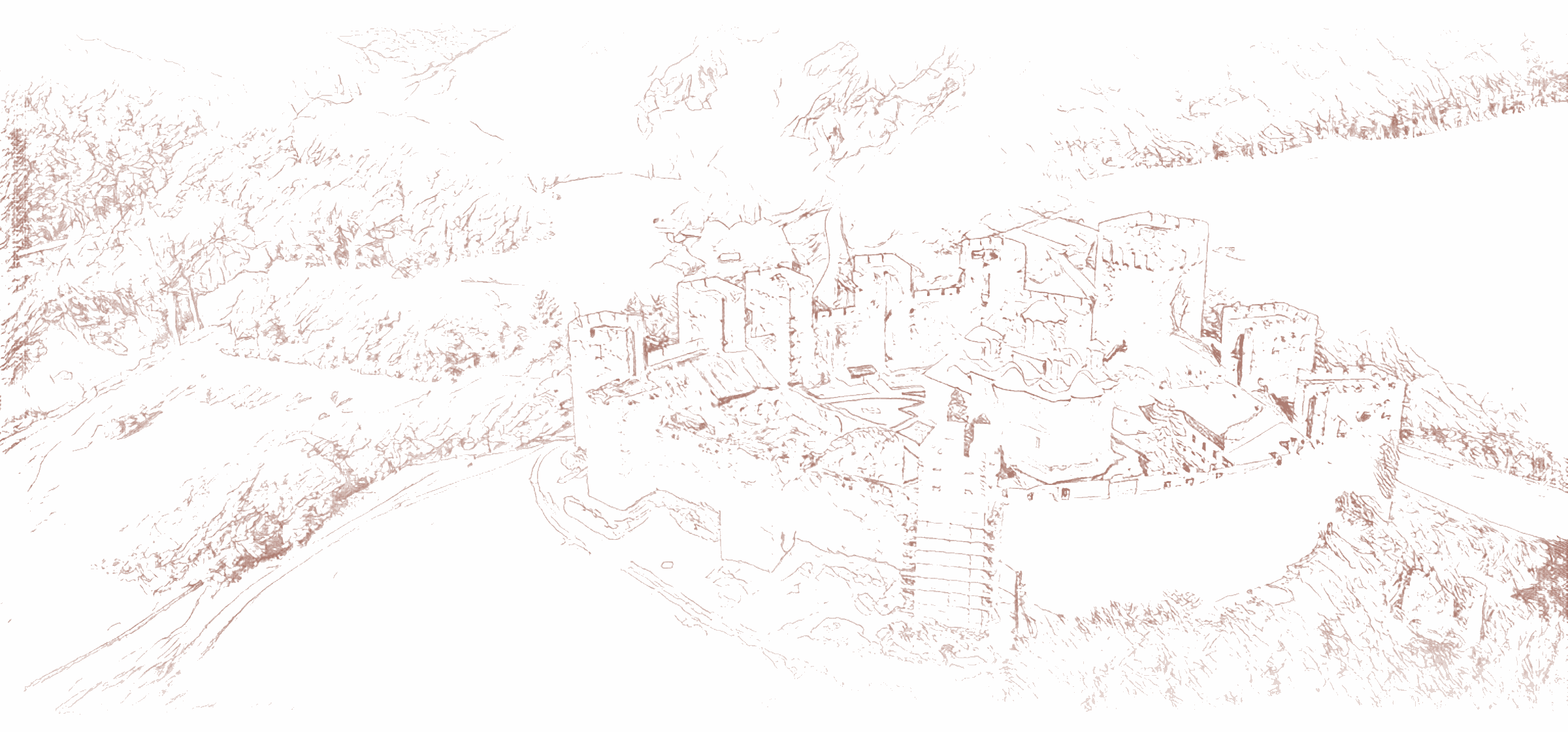
The defensive walls and machicolations of the fortification of the Resava monastery are an exceptional example of medieval military architecture in Serbia, which combined effective defense with technical and architectural innovations, ensuring the monastery maximum protection while at the same time emphasizing its monumentality.
The Despot's Tower
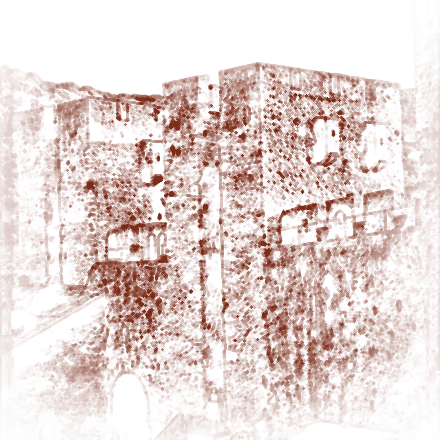
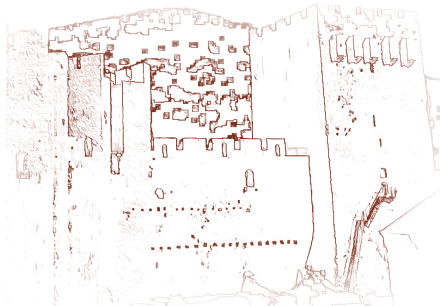
The donjon of the Resava fortification, known as the Despot's Tower or the Despot's Pyrgos, is an exceptional example of Serbian medieval fortification architecture. This tower stands out for its monumentality, as well as for its defensive characteristics and technical solutions, which make it the central element of the fortification of Manasija Monastery. The Despot's Tower is the only closed tower in the fortification, and the only tower that also served as a dwelling in times of danger. The tower is square in plan, and its sides are about 14.5 meters long. In its lower part the tower widens and reaches almost 20 meters in width at ground level, which gives it greater stability and strength. The total usable area of the Despot's Tower is about 360 square meters, with a ground floor, five stories and a wall-walk. The Despot's Tower rises above the whole Fortress of Manasija - it is about 35 meters high. The entrance to the tower is placed centrally on one façade, surmounted by a semicircular niche that once held a fresco. In front of the entrance there was a platform on stone corbels, reached by a wooden staircase. This staircase could be removed in time of danger, which gave the tower an additional defensive function. The ground floor of the tower is set about 10 meters above the level of the monastery courtyard. Beneath the interior space of the ground floor there is a circular underground chamber that most probably served as a granary. More than 20 tons of grain could be stored in this underground chamber, which was sufficient for the yearly needs of about a hundred people. On the second story of the Despot's Tower a seated latrine has been preserved. The fifth level of the tower is particularly significant because it contains 19 machicolations, which considerably strengthened the defensive capabilities of the tower. The tower was topped by a steep hipped roof, most probably covered with lead sheeting, and a wall-walk edged with crenellations. The donjon of the Resava fortification represents the culmination of the fortification solutions of medieval Serbia. The thickness of the walls of this tower, its height, its defensive elements such as the machicolations, and the rational use of space, place the Despot's Tower of the Fortress of Manasija among the best-preserved and most significant towers of last defense in our lands. Compared with similar structures at Ravanica, Kruševac, Stalać, Smederevo and Belgrade, the Despot's Tower at Resava provides the fullest insight into Serbian medieval defensive architecture and its evolution.