


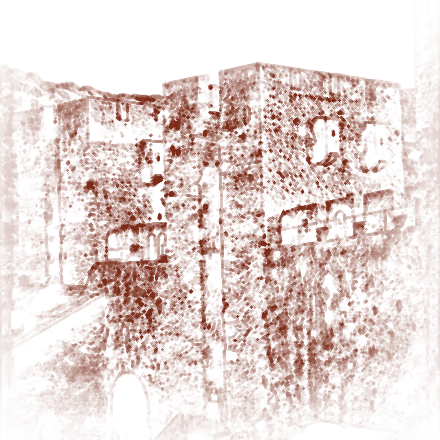
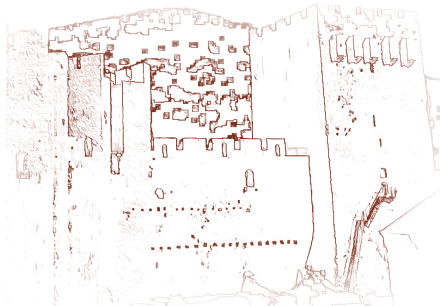
In the second half of the 20th century a partial restoration of the Resava fortress was carried out. In 1948 Manasija Monastery was placed under state protection, and this was followed by archaeological and architectural research as well as restoration works. During the last decades of the 20th century and the first few decades of the 21st century the Fortress of Manasija was partially restored. Sections of the monastery ramparts and certain towers, as well as part of the outer defensive wall, were fully restored. Since the middle of the 20th century, and especially intensively over the last twenty years or so, systematic archaeological research has been conducted at Manasija Monastery. Further phases of the restoration of the monastery and the monastic fortification have been planned and envisaged, and according to the plan the fortification is to have its original appearance fully restored.
The Ramparts and Ditches of Manasija
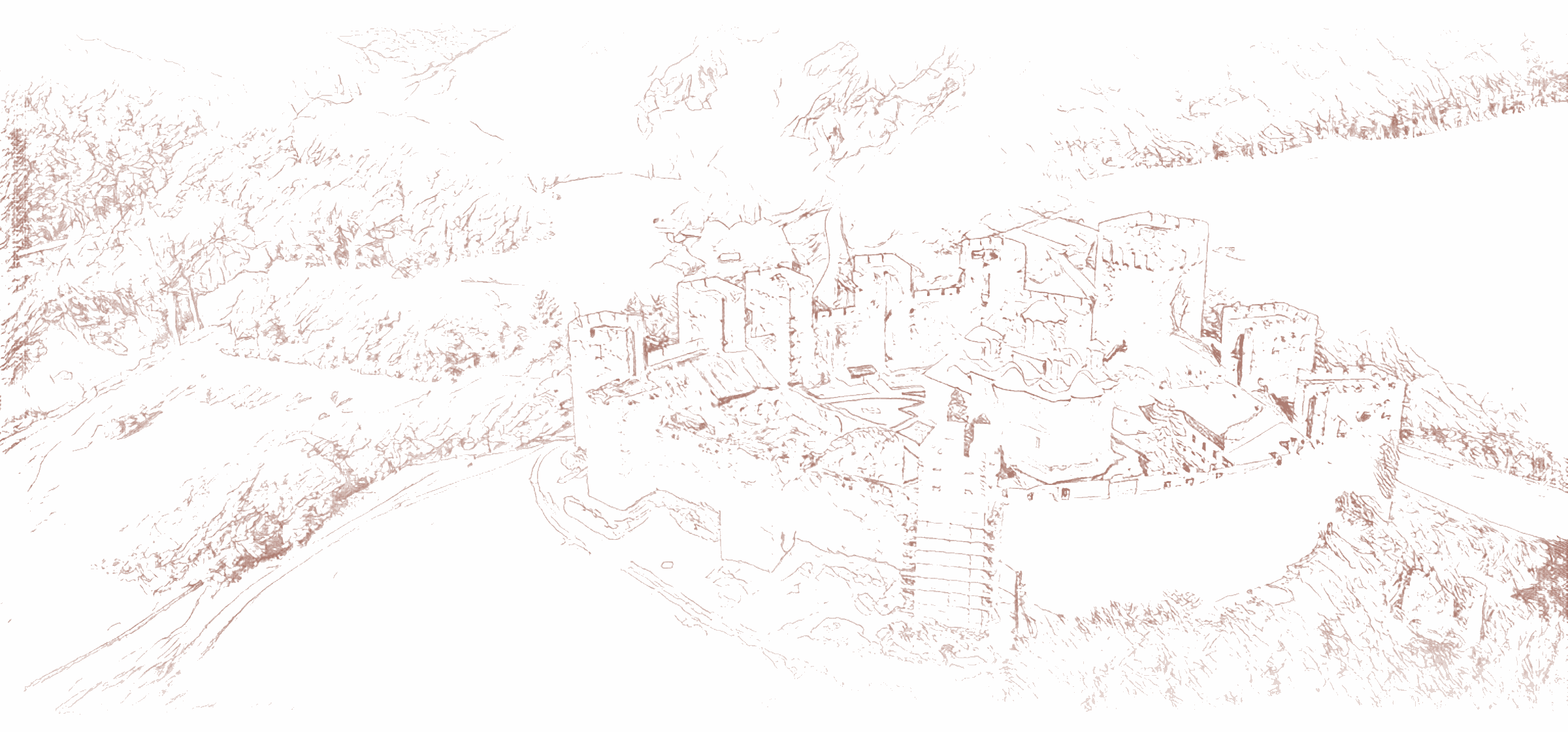
The complex of Manasija Monastery, a Serbian medieval architectural master- piece, is girded and walled by an irregular circular defensive wall with twelve towers. The interior area of the fortified space is impressive - the fortification encloses an oval-shaped area about 85 meters wide and about 100 meters long, that is, an area of about 0.8 hectares. The fortification was designed to adapt to the terrain and to the potential directions of attack, which explains the smaller intervals between the towers on the western side and the larger ones on the east. All the towers, except the donjon tower, project from the plane of the ramparts and are linked to one another by defensive walls, which allowed the defenders to move unhindered and to defend the entire monastic complex effectively. The donjon tower, also known as the Despot's Tower or the Despot's Pyrgos, the tower of last defense, remains an exception in this system: it could not be entered from the ramparts, which gave it additional security. The massive walls of the Fortress of Manasija are from 12 to 15 meters high, depending on the location. The thickness of these walls ranges from 3 to 3.30 meters. The length of the walls of Manasija is also impressive - the perimeter of the inner defended area is about 310 meters. On the northeastern side of the fortification, where access to the monastery was most difficult, there is a projecting part of the fortification known as the Little Town. This rectangular area, about 20 meters wide and about 60 meters long, had a separate entrance, but through passages in the towers it was connected with the monastery courtyard. It is believed that this part of the Resava fortress served to house the garrison and meet its needs, and was thus separated from the monastic part of the complex.