

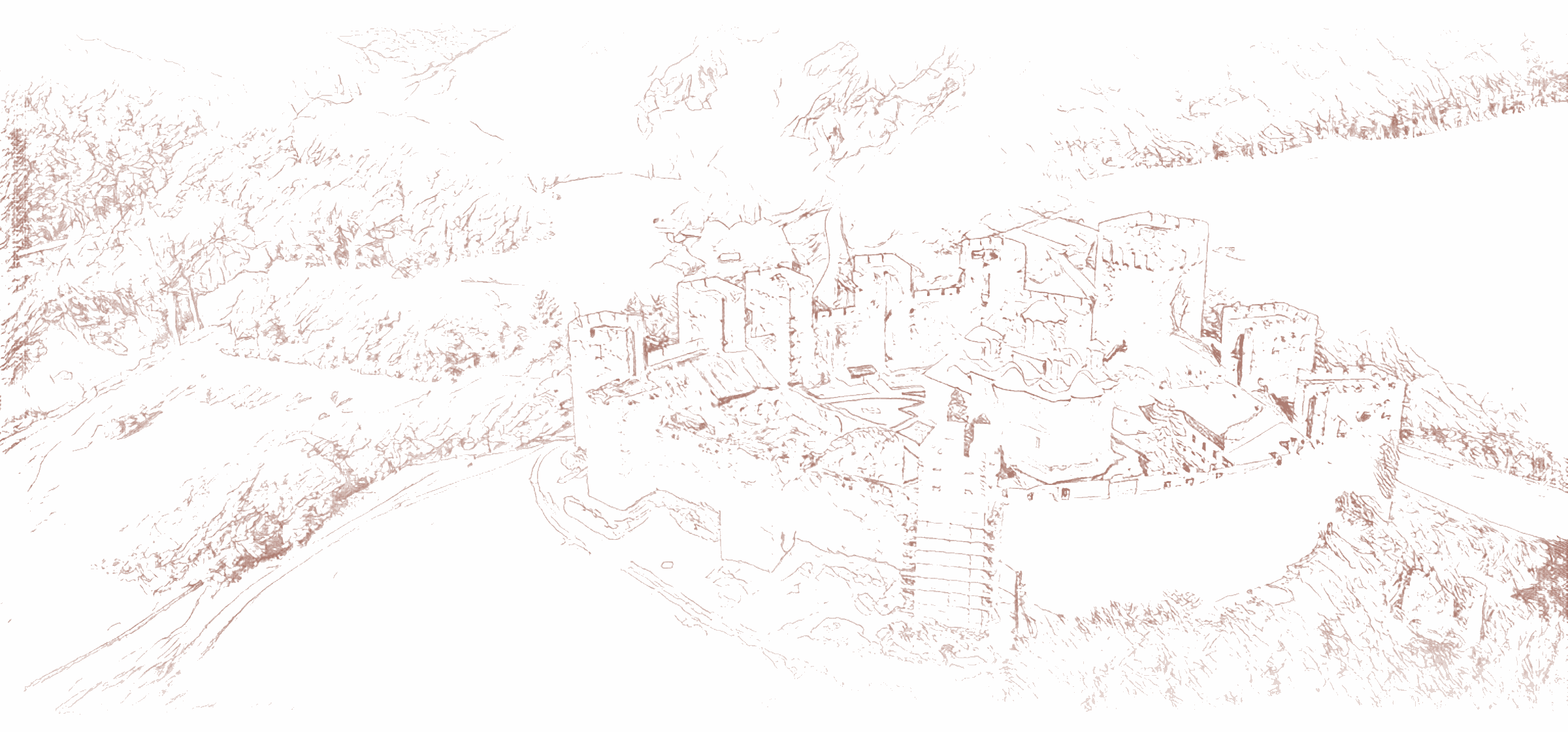
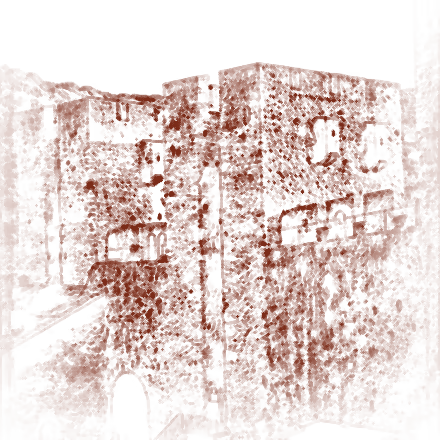
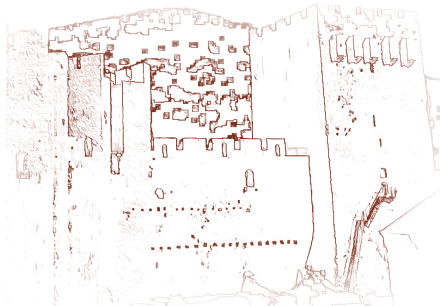
Under the Ottomans the Manasija fortification was not maintained, and its defensive walls and towers began to decay. Some of the buildings of the monastic complex disappeared, and the ravages of time began to wear away both the Manasija church and the fortress. After liberation from foreign rule at the beginning of the 19th century, Manasija Monastery rose from its ruins through the labor of the monks who restored it. Repairs to the monastery Church of the Holy Trinity were the priority; for the repair of the ruined state of the monastic fortification, however, there were neither the means nor the opportunity. The Resava stronghold was neglected; in the earthquake that struck at the end of the 19th century the Resava fortress also suffered and was damaged. From the 19th century onward Manasija attracted both domestic and foreign researchers and travel writers; although the main object of scholarly interest was the Church of the Holy Trinity, the Manasija stronghold was also of interest to scholars and travelers, who left a considerable number of records and testimonies about the fortress itself, as well as several sketches and drawings. Of interest are the brief travel notes of Joakim Vujić (1772–1847), who records that the monastery is surrounded by 12 ruined towers; valuable are the testimonies of the Manasija abbot Evgenije Simeonović (1815–1880) from the middle of the 19th century, and significant too are the records of the Serbian geographer Vladimir Karić (1848–1894) from the end of the 19th century. The Fortress of Manasija was described by the Prussian army captain Otto Dubislav Pirch (Otto Ferdinand Dubislav von Pirch, 1799– 1832), the German engineer Wilhelm Richter (Wilhelm Richter, ?), the writer and ethnographer Milan Đ. Milićević (1831–1908), the Serbian officer and academician Jovan Mišković (1844– 1908), and other authors. The German travel writer and archaeologist Felix Kanitz (Felix Philipp Emanuel Kanitz, 1829–1904) left his notes and drawings from the second half of the 19th century, and the renowned Byzantinist Gabriel Millet (Gabriel Millet, 1867–1953) visited Manasija several times and photographed both the monastery and the fortification in the 1930s. However, although it attracted the attention of the scholarly and cultural public, both at home and abroad, during the first half of the 20th century the Fortress of Manasija suffered significant destruction on two occasions. First in 1911, during the construction of a road beside the monastery. The renowned Serbian archaeologist, academician Mihailo Valtrović (1839– 1915), reacted and wrote about the damage to the monastery. But his reaction did not prevent the damage. At that time certain parts of the ditch wall - the counterscarp - were destroyed. Even greater destruction occurred in 1929, when, as part of measures undertaken by the authorities of the Kingdom of Yugoslavia for the "protection and safeguarding of the monastery," the dilapidated and loosened upper parts of the towers and ramparts were torn down and then sealed with concrete. In this way the authentic forms of the monastic fortification were destroyed. The works were halted after a reaction by the architect Đurđe Bošković (1904–1990), who published in the daily press an article about the damage done through the negligence of institutions, through disregard for the cultural heritage and, finally, through an arrogant and unprofessional attitude toward the antiquities of Manasija. He observed with regret that even the conquerors - the Turks and the Austrians - had taken care to preserve the ramparts of Manasija, while now what ought to be preserved was being torn down. "What the enemy did not wish to do and time had not yet managed - we have done ourselves," Bošković emphasized.
Manasija Monastery · Imperial Lavra of the Holy Trinity

Manasija
loading the page