


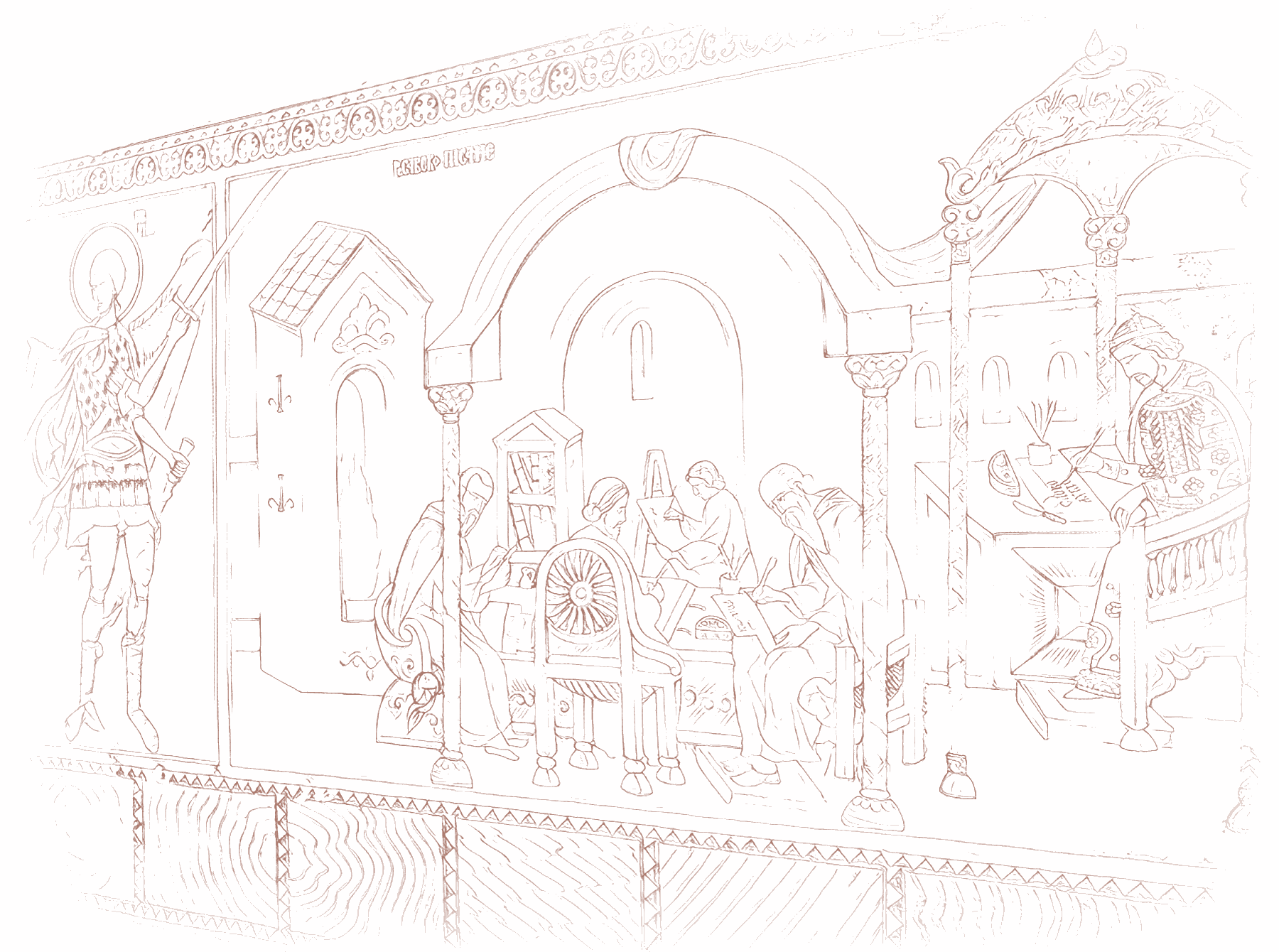
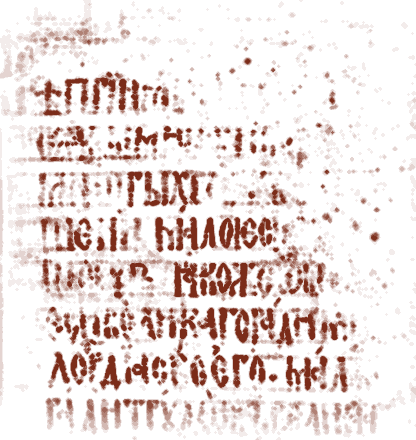

Also a work of Saint Despot Stefan is the Inscription on the Kosovo Marble Pillar, an epitaph which, it is presumed, was carved between 1402 and 1404 on a pillar erected on the Field of Kosovo, at the place where the Serbian army, led by his father Prince Lazar, perished in the battle of 1389. In this rhetorical text Despot Stefan glorifies and gives thanks to the Serbian heroes, emphasizing their heavenly glory and their Christian choice - their decision, together with the Holy Prince, "to make a good end in Christ and receive the crown of suffering." The existence of this pillar is also confirmed by Konstantin Mihailović of Ostrovica (c. 1435–1501)) in his memoirs. The inscription has survived only in a transcript, while the pillar no longer stands in its place.
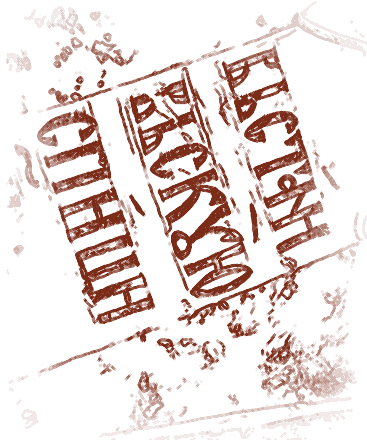
The most celebrated work of Despot Stefan is the Homily on Love - a unique poem written as an acrostic, which exalts love as the loftiest power, composed most probably in 1409. It is believed that this poem of the Despot, more precisely a poetic epistle, was a poetic letter addressed to his brother Vuk: that it was a call to reconciliation, a plea that fratricidal blood not be shed, that discord not tear apart the Serbian people. There are also other hypotheses as to whom the Despot wrote this poem for. In these lines he sings of love in all its forms - brotherly love, the love of friends, but also that loftiest, Christian love - love for one's enemy. As an example, Stefan mentions the biblical Prophet - King David, who grieves over the death not only of his friend Jonathan but also of his former enemy, King Saul. In this writing of the pious Despot Stefan, too, biblical allusions and quotations from Holy Scripture are indispensable. Love for God, the Creator of the world, is the loftiest motif of this poem.
In this poem the Despot also marvels at the beauties of nature - God's creation - whose splendors no one can express; yet compared with love they are insignificant, for love surpasses them all. For God is love - says the Holy Despot, quoting the Apostle John (1 Jn.
4, 8). Some interpreters also see in this poem of Despot Stefan praise of sensual love, in the words addressed to young men and maidens - that they should come to love love; however, the text of the Homily on Love does not speak of that kind of love, since already in the next verse it warns the young not to harm their youthful purity and virginity, for through virginity our nature is united with the divine; further, the author of this poem warns the young not to grieve, by unseemly behavior, the Holy Spirit, by whom we were sealed in Baptism - now quoting the Apostle Paul (Eph. 4, 30).
Among the literary works of Despot Stefan Lazarević is also counted his Law on Mines, an important legislative act from 1412. Namely, since in the first half of the 15th century the Serbian Despotate experienced a period of economic flourishing, owing in great measure to the development of mining, the need arose to regulate Serbian mining. As a wise ruler, Despot Stefan enacted the Law on Mines, by which he defined the rules of mining and regulated the life and work of miners. In the text of the Law itself