



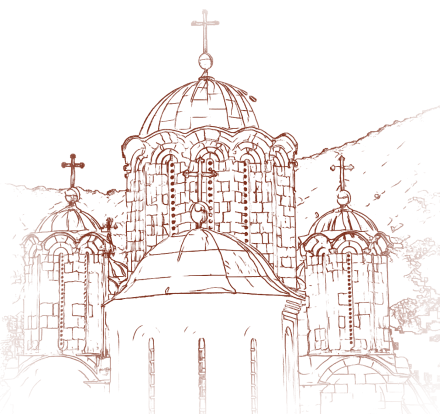
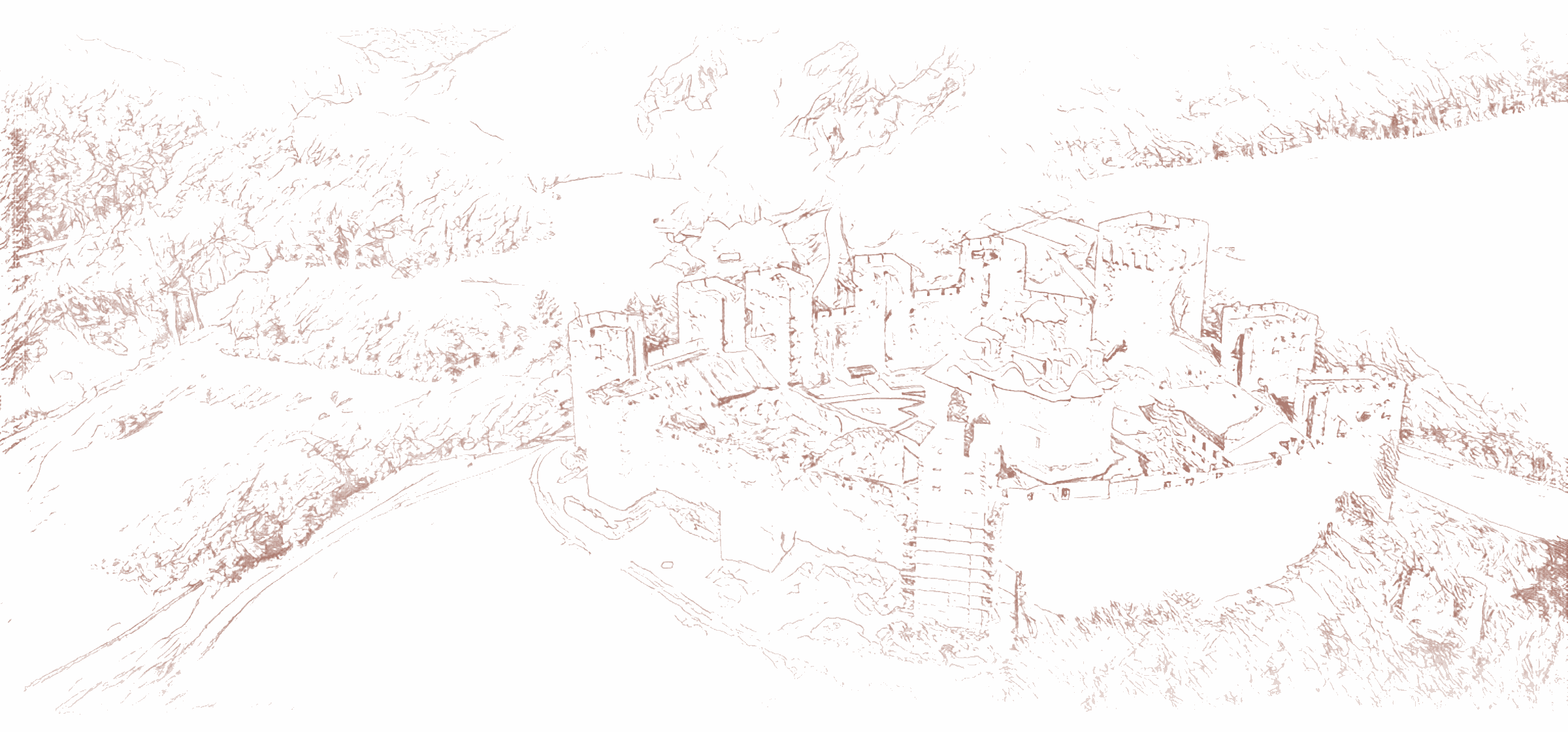
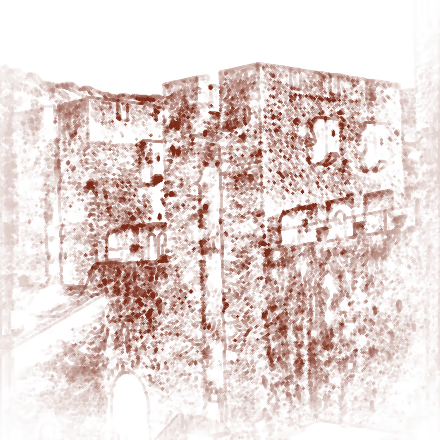
Nevertheless, circumstances changed during the 18th century. Or rather: occupations succeeded one another. With the conclusion of the Peace of Passarowitz (Požarevac) between the Austrian and Turkish empires in 1718, the monastery of Resava found itself under Austrian rule, and this change brought about circumstances in which it was possible to begin a certain restoration of Manasija Monastery, and that soon after the change of rule. In the Austrian census of the border regions from the end of 1718, in the register of the Resava District, Resava is mentioned as a place (a river?) with four watermills ("Ressova, vier mühlen"), and once more with a puzzling remark - that three monasteries are located near it ("Reschova, allwo drei Klöster") [PPN 21]; unfortunately, this brief mention gives no further details that would help to illuminate the history of Manasija Monastery. However, the imperial governor Karl Alexander von Württemberg (1684–1737), in his report sent to Prince Eugene of Savoy (1663–1736) after touring the regions of central Serbia in December 1720, records that the Resava fortress is in poor condition and practically useless in a military sense, but that next to it there is an exceptionally beautiful church, in which monks hold divine services ("eine überaus schöne Kirche, worinnen Caludier ihren Gottesdienst halten") [IKAV 62]. In the first half of the 18th century a large number of graffiti were scratched into the walls of the monastery church, mostly in Latin script, whose authors were most probably Austrian soldiers or officials, and among them there are also several Cyrillic inscriptions from the same period. In the wall of the altar apse of the monastery church, one inscription bears the scratched name of Metropolitan Arsenije of Raška (Jovanović Šakabenta, 1698–1748), with the year 1722 written below it [SSZN 2412], from which some researchers conclude that he visited the monastery of Resava at that time.26 In the Extract of the Protocol of the Eparchy of Servia from 1723 or 1724, the villages belonging to the parish of the monastery of Resava, in which "the Resava monks serve as priests," are listed; this document lists the following villages of the Resava parish: Grabovica, Popovići, Jeovac, Subotica, Đonci, Grabovac, Svilainica, Gložani, Vojska, Orašje, Srnjak and Panevac, with a total of 187 households [EPES 153]. According to the register of marriage fees in the Metropolitanate of Belgrade compiled in October and November 1724, in the Resava parish, which comprised the villages of Grabovac, Popović, Jeovac, Orašje and Alikija (with a total of 72 houses - 72 "loaves"), the fee for 2 weddings was paid during 1724 [PTV 318–319], while 15 florins in fees were collected from "the Resava monks" in the same year [PTV 322]. This could mean that by 1724 at the latest the Resava parish was active, that is, that by that year at the latest the activity of the monastery of Resava had been renewed. According to an inscription from the altar that has not survived, known today only from the literature, in 1725 lay people began to restore Manasija, in the time of the proigumen Arsenije [SSZN 10234]. The exarch of the Metropolitan of Belgrade, Maksim Radković, visited the monastery of Resava in 1733, and in his report he recorded that the Resava Church of the Holy Trinity was furnished with icons, new doors, a polyeleos chandelier, candle stands and vigil lamps, sacred vessels, vestments and liturgical books (the Gospel, the Apostle, the Triodion, the Octoechos, 12 Menaia, and a Moscow collection of Sunday homilies), etc., with the remark that the Resava monks keep the monastic liturgical rule and chant the Holy Liturgy [IMR 166–168]. In the Metropolitan-Patriarchal Archive in Sremski Karlovci, a more extensive but still unpublished description of the Resava monastery has been preserved, compiled on August 15, 1733, by Archdeacon Vićentije Stefanović,27 later Metropolitan of Belgrade and Patriarch of Peć (†1758). Stefanović's description provides more details about the icons of the Resava church, mentioning both old and miracle-working icons. From the descriptions of Stefanović and Radković it may be concluded that monastic life in the monastery of Resava blossomed within a very short time.
- Cf. Tomić and Nikolić, Manasija: History - Wall Painting, 33 (see also fig. 23, in the same place).
- According to the research of Leposava Šelmić - Archive of SASA in Sremski Karlovci, Metropolitan- Patriarchal Archive, Fond A–1733/138 (cf. Leposava Šelmić, "Icons of the Monastery of Bođani from the First Half of the 18th Century" („Иконе манастира Бођана из прве половине XVIII века"), Zbornik Matice srpske za likovne umetnosti, no. 34–35 (2003): 279–292 + Pl. I–VI: 289–291, Pl. VI).