



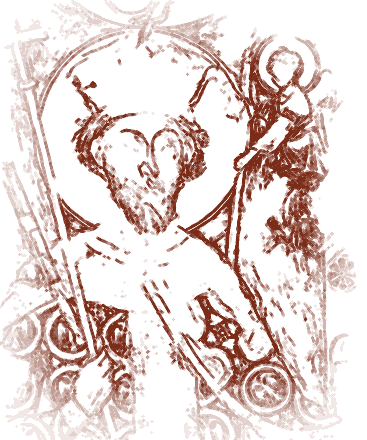
Despot Stefan Lazarević
The Life of the Holy and Right-Believing Stefan the Tall, Despot of Serbia
Page 19 of 44
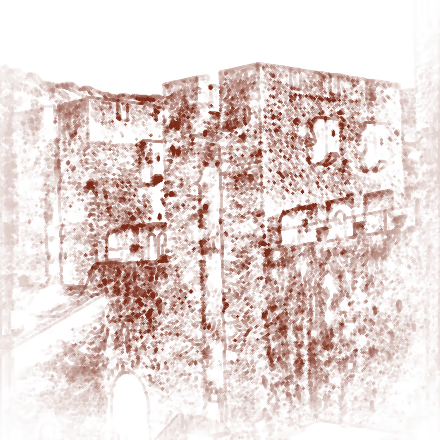
Belgrade was ruined and neglected, Despot Stefan chose it as his capital because of its extraordinary natural geographic position and fortification. The Despot thoroughly renewed Belgrade, built it up and set it in order, settled it with a numerous new population, adorned it with many churches of God and hospitals, and dedicated it to the Most Holy Theotokos, to Whom Constantinople too had been dedicated. Of this the holy Despot himself tells us in his charter of the city of Belgrade, which he issued as ruler on that occasion: "From Kosovo I was enslaved to the Ishmaelite people, until the Persian and Tatar tsar came and destroyed them, and God by His mercy delivered me from their hands. Thence, then, having come here, I found the most beautiful place from of old, the very great city of Belgrade, which was ruined and desolate; I built it up and dedicated it to the Most Holy Mother of God." And how beautifully the holy Despot of all Serbia and of Belgrade built and adorned the Serbian capital Belgrade, like another Jerusalem, is again best told us by his biographer Constantine the Philosopher, who himself at this time came to the Despot and settled in Belgrade. "Stefan from then on," says Constantine, "did not rest at all, being very diligent and brave, but took in hand the aforementioned city, which was one of the great ancient cities and in an extraordinarily beautiful place, as few places in the inhabited world, moreover with a broad outlook and view, and with every fortification. Nowhere could we imagine or find a refuge like this one, with approaches by water and by land, so that if many tens of thousands (of enemies) came beneath it, and help arrived and within there was readiness for battle, one could sally forth all at once. Has anyone anywhere told of such a city? Therefore the Despot, having seen this place and considered it - and let us say this: faster than that Constantine equal to the apostles (when he built Constantinople) - swiftly built Belgrade. But who is able to express in writing what are the positions and views and the beauties of this city; and how many fortifications and towers with ramparts the Despot built for the people who live within and without. Of all imperial cities this one truly had the most beautiful appearance. But the Despot always spoke of this in humble words, and expounded to his chosen ones the words of the Gospel, and instructed them as a teacher. And he had also greatly adorned the royal court, and made around the city wondrous moats (i.e. water channels) between the double walls of the city. And Belgrade was truly seven-crested. For the highest part of the city (in Belgrade) and the most beautiful, similar in appearance to Zion in Jerusalem, was an image of the heavenly Jerusalem, for whose sake the prophet there cries out: 'Rejoice greatly, O daughter of Zion, proclaim, O daughter of Jerusalem, for you are on the heights and have beheld the coming of your king' (Zech. 9:9). And the second crest of the city was by the rivers (the Danube and the Sava), where within it is also the harbor for ships on the northern side of the great city. And the third crest of the city is where the harbor for the imperial ships is; it also has a multitude of fortifications. The fourth crest is the great tower, similar to the very house of David on Zion, with pillars and edifices. And the fifth crest is behind this one, where all the imperial treasuries are. And the sixth is to the east of this, a pillar (tower) which divides both towers, as indeed Solomon says: 'O tower of David, on which hang a thousand shields and all their arrows' (Song 4:4). This pillar (tower) is seen as some extraordinary marvel from all distant regions, set firm upon strong ramparts. The seventh crest is in the west, with another lofty imperial house, and beneath it was a passage for the pious Despot to the ships, as by a secret way. And the great upper city had four gates (city gates), in the east and west and north and south, and a fifth which leads into the inner city. In the east and south were great gates, with great towers and bridges