


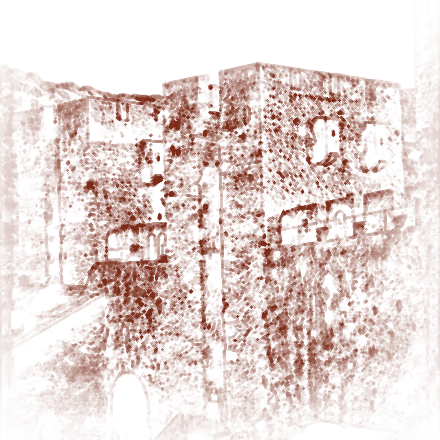
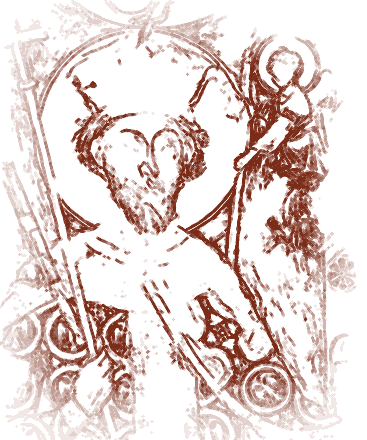
Despot Stefan Lazarević
The Life of the Holy and Right-Believing Stefan the Tall, Despot of Serbia
Page 18 of 44
"Who shall then tell the untold joy when the land, until then desolate, now once more received such a shepherd! Stefan, breathing fire, flashed like lightning, thundering, confounding the disobedient. And all impiety was trampled down and put in fear; the hands of those who did injustice and evil were cut off, and justice blossomed and bore fruit. The swift did not drive out the slow, nor the rich the poor, nor did the mighty seize the possessions of their neighbors, nor did the sword of the powerful whirl about, nor was the blood of the righteous shed, nor was there evil and foolish speech, nor lying against the chief men, nor contempt for those most glorious in rank, nor anything else of the like. And how much did he pacify by the counsel of the emperor! Or, if anyone lost through his infidelity, or through failure in service, or in whatever way became poor, such the Despot set in the first dignity and honor, even though they had been in wretched circumstances, so that in nothing were they deprived of their father's or grandfather's or great-grandfather's place. For according to the divine counsels he said of those who had sinned that they ought not to be punished twice. And him who had sinned in nothing, loving him in Solomon's manner, he honored. The Despot had from the beginning, so to speak, raised a wondrous garden: some as chiefs over affairs, others as guardians, that is, the guard, and these were the rank nearest to him. Further there was a second, and then a third rank and order, in such a way that these were in fellowship with the others, and the others with the first, as it were after the angelic rank and order, as Dionysius the Areopagite depicts it. For God too, after His own image, entrusted to men the authority of the state. And in the affairs of the imperial household there was a multitude of these in every rank, so that there might be enough of them at every time, that there might be more than enough. And all, with fear, were looked upon as angels by the eyes of those who came, and amazed at their piety, and all conducted themselves toward one another with good order and good modesty. Especially those inner ranks which were watched over, appointed and illumined by the Despot's eye. Shouting, or stamping of feet, or laughter, or unseemly clothing might not even be mentioned, for all were clothed in bright garments, which the Despot himself distributed. And the imperial palaces shone with all imperial splendor and order. All looked upon the Despot with reverent awe. And this too must be known, that no one could look him in the eyes, not even the greatest. And this is not said only by us, but all those who experienced it bear witness. And whoever vowed that he would look upon them could in no way be granted it. But stranger still than this is the following: in such a rule, who ever escaped the love of women and music and playing? Yet this pious man hated both, and what is more rejected them. He permitted only that there be military music, as much as is needed for war. And so he went about the land of his fatherland, and having subdued also those regions which from of old had only been called Serbian at certain times, he drew those regions to himself, and some he also conquered. And when the Western ruler (Sigismund) heard this, he sent envoys (to Stefan) that he might come into friendship with him. And he, perceiving that now was a fitting time to be his ally, received the envoys with love and entertained them amply, as was his custom, and with those envoys confirmed the friendship. Then, going about and overseeing his land, he found the aforementioned place Belgrade and obtained it from the Hungarians, since it lies in Serbian regions. And having come to an agreement with them, the Despot took great care to build Belgrade as well as possible." Having in this way concluded a state treaty with the Hungarian King Sigismund and obtained Belgrade and its surroundings as a Serbian city from of old and on Serbian land, the holy Despot at once set to work and began the building of the strong city of Belgrade as his new capital (this was at the end of 1403 or the beginning of 1404). Although at that moment