


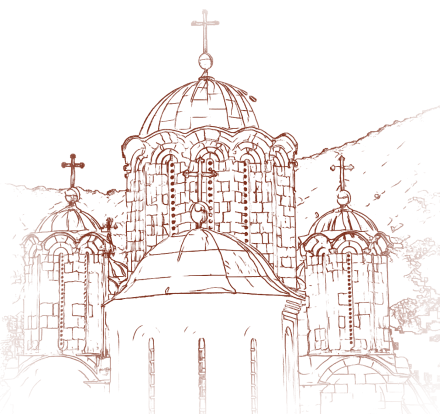
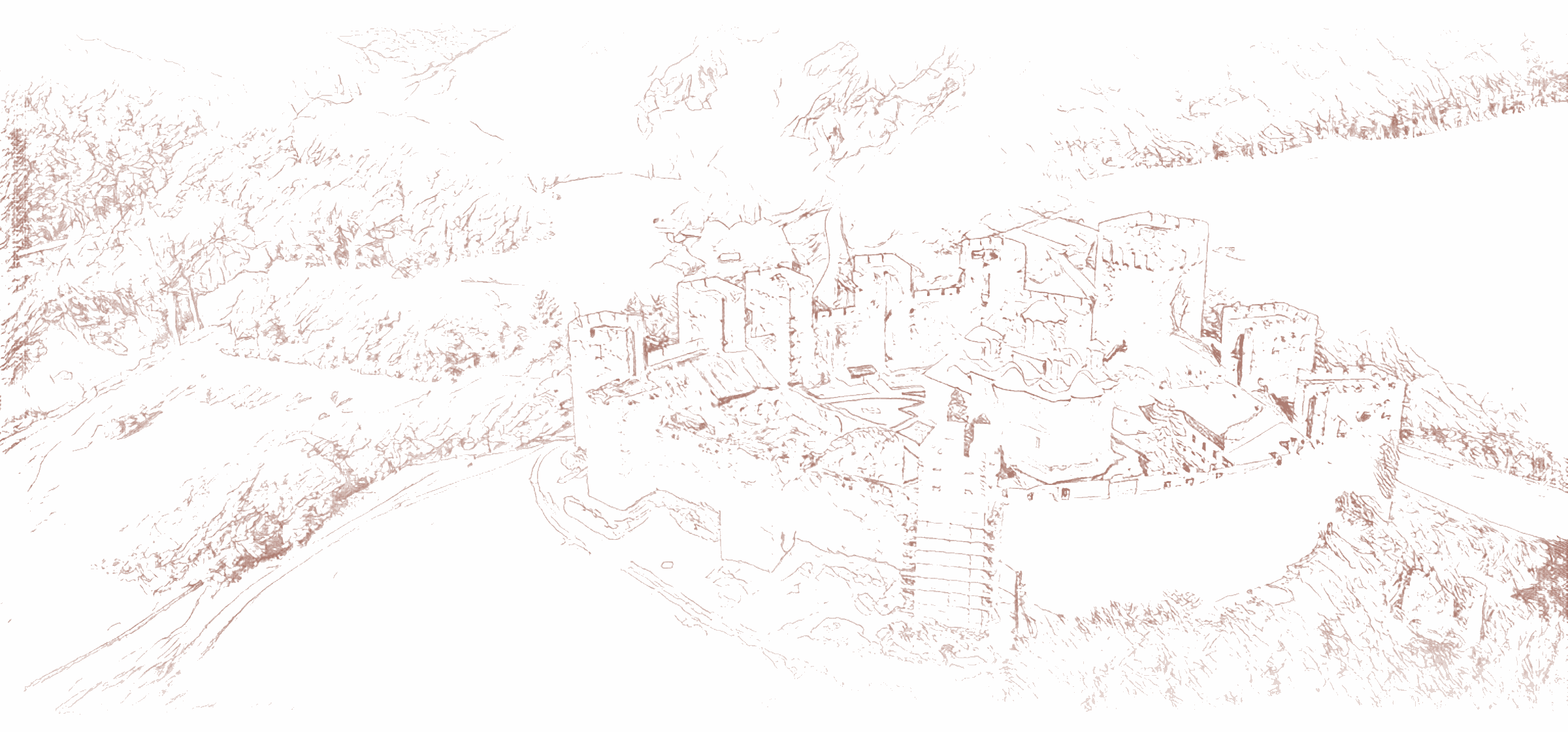
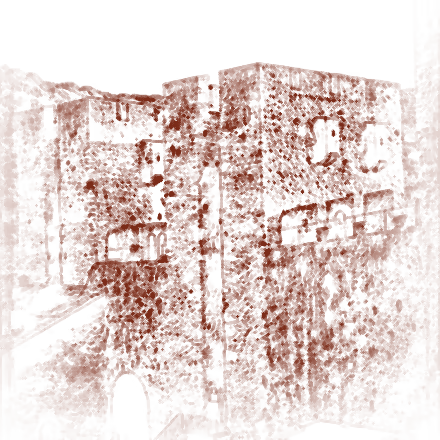
The aim of this text is not to present the history of Manasija Monastery to its readers, but rather to encourage and invite them to explore the history of the magnificent endowment of Saint Despot Stefan and to come to know better the saintly figure of its pious founder (ktitor). It is true that since the second half of the 20th century Manasija Monastery has drawn the attention of the scholarly public: besides the large number of published studies and academic research devoted to various aspects of the spiritual and cultural heritage of the Resava monastery and of its founder, Saint Despot Stefan, an annual scholarly conference has been held at Manasija Monastery for several decades now. Yet the questions that ought to be answered are many. The uncertainties are more numerous still. Field research at the monastery is still ongoing: the great discovery of the burial place of the Holy Despot in the first decade of the 21st century222 shows, on the one hand, how important the study of our past is, and on the other, how great the significance of Manasija Monastery is in the entire history and culture of the Serbian people. In their studies to date, researchers have perhaps made less use of the literature from the church periodical press,223 which can certainly be of use in future studies of the history of this monastery, especially for the period after liberation from the Turks and particularly for the period of more recent history, above all for tracing the spiritual dimension of Manasija Monastery, first and foremost the history of its monastic brotherhood; certainly, more recent bibliographies, especially national and thematic ones, greatly facilitate future research. While we hope for and await such research, Manasija Monastery, the endowment of Saint Despot Stefan, remains an inspiration for artists - for generations of architects, painters, writers, and especially for poets: as a kind of reflection of Heaven, Manasija is an artistic inspiration, among others the inspiration of many Serbian poets.224 Theology, in turn, is in a certain way akin to poetry - not only because God's beauty and God's glory can sooner be sung than expressed, but also because the true poet is one who creates out of love and with love, and love is the presupposition of every word about God, who is Love. In that sense it is no wonder that precisely at Manasija Monastery - as a place of the loving encounter of God and man, as its holy founder conceived it - that precisely in such a place the Holy Elder Sophrony found inspiration for his theological and artistic work: all the more, then, is the call of Manasija addressed, before all others, to theologians and to lovers of God. Although the cultural treasure we have inherited from our holy forebears is earthen, just as every human being is a treasure in an earthen vessel, it nevertheless radiates an unearthly splendor - the splendor of the glorious centuries of a renowned and unforgettable past, but even more the splendor of That Which Is to Come, sparkling with sparks of eschatological radiance, here and now, already, but not yet in fullness. Come, and see!
Bibliography
Archival Material and Sources
- Cf. Marin Brmbolić, "The Tombs in the Church of the Resava Monastery" („Гробнице у цркви манастира Ресаве“), Saopštenja XXXIX (2007): 9–24; Nataša Miladinović-Radmilović, "Anthropological Analysis of the Finds from the Graves in the Church of the Resava Monastery" („Антрополошка анализа налаза из гробова у цркви манастира Ресаве“), Saopštenja XXXIX (2007): 25–62; Marin Brmbolić, "The Founder's Tomb in the Church of the Resava Monastery" („Ктиторска гробница у цркви манастира Ресаве“), Arheološki pregled / Archaeological Reports, new series, vol. 4 (2006) [2008]: 179–181; Nataša Miladinović-Radmilović, "The Founder's Tomb of Despot Stefan Lazarević in the Church of Manasija Monastery - An Anthropological Analysis" („Ктиторска гробница Деспота Стефана Лазаревића у цркви манастира Манасије - антрополошка анализа“), in: Serbian Archaeological Society: 40th Assembly and Annual Meeting and Celebration of 70 Years of the Institute of Archaeology (Mnemosynon Firmitatis), Belgrade, June 5–7, 2017. Program, Reports and Abstracts, ed. Vojislav Filipović and Adam Crnobrnja (Belgrade: Serbian Archaeological Society - Institute of Archaeology, 2017), 144–145; Nataša Miladinović-Radmilović, "The Founder's Tomb of Despot Stefan Lazarević in the Church of Manasija Monastery - An Anthropological Analysis", in: 600 Years of Pavlovac Monastery (600 година манастира Павловац), ed. Velibor Katić and Nemanja Marković (Mladenovac: Municipality of Mladenovac, 2017), 123–139, etc.
- For a summary overview of the literature on Manasija in the church periodical press up to 1970, cf. Branko A. Cisarž, A Century of the Periodical Press of the Serbian Orthodox Church (A Bibliographic Description of Journals and Newspapers with a Survey - the Contents of All Works Published in Them from 1868–1970). Vol. I, A–M (Belgrade: Holy Synod of Bishops of the Serbian Orthodox Church, 1986), 133, 158, 160, 333, 409–410, 418 [bibliographic entries 2.1579, 2.2468, 2.2536, 11.210, 15.578–15.594, 15.768–15.769], and Branko A. Cisarž, A Century of the Periodical Press of the Serbian Orthodox Church (A Bibliographic Description of Journals and Newspapers with a Survey - the Contents of All Works Published in Them from 1868–1970). Vol. II, N–Š (Belgrade: Holy Synod of Bishops of the Serbian Orthodox Church, 1986 [1991]), 143, 404, 408 [entries 19.2668, 21.4632, 21.4796]. The abbreviations are expanded here in the order in which they are cited in the work. ŽDS - The Life of Despot Stefan; citations are given by chapter of the Life; editions of ŽDS:
- Cf., e.g., Radomir Andrić (ed.), Love Excels in Manasija (Манасији љубав превасходи) (Belgrade: Književne novine-komerc - Despotovac: National Library "Resavska škola", 1994).