


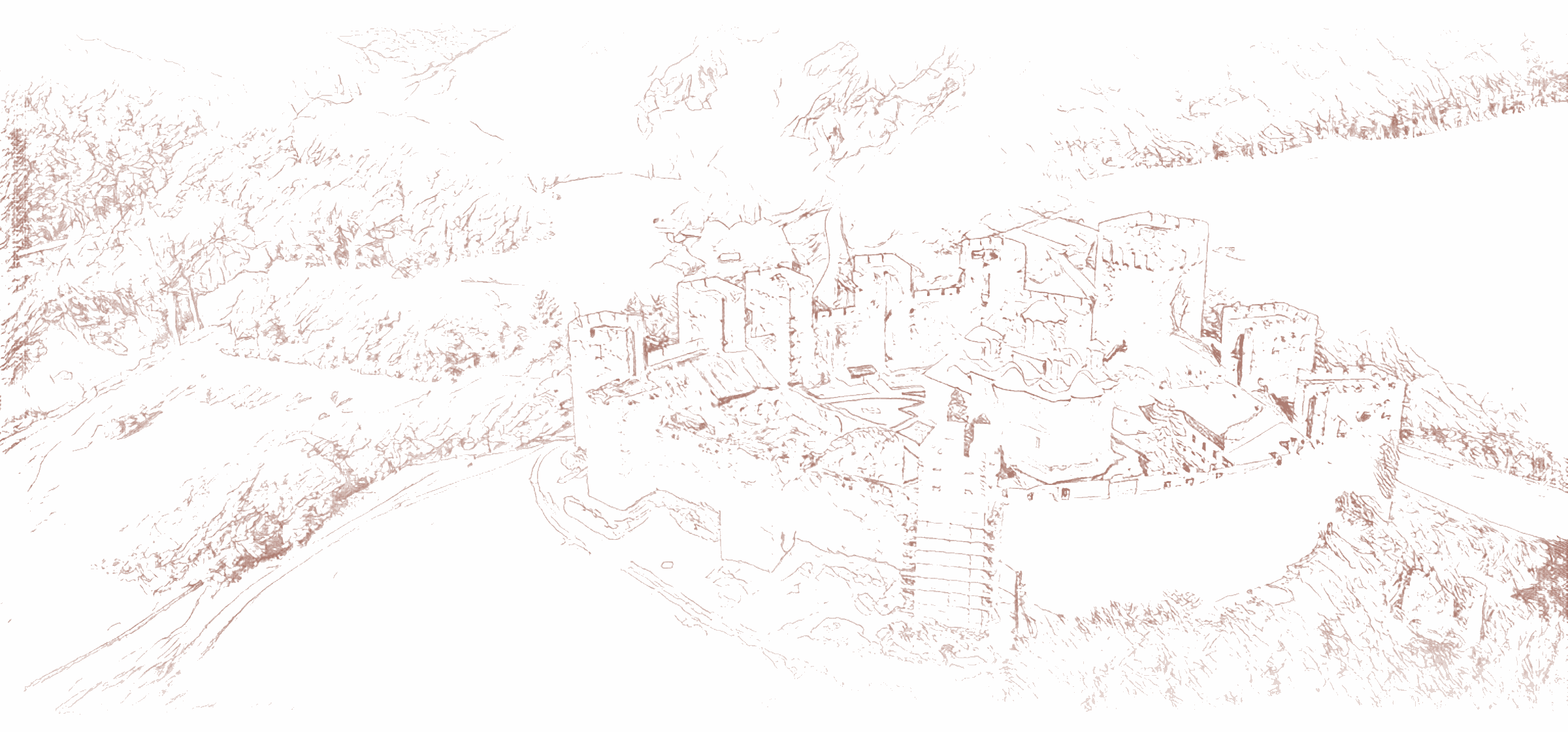
At the beginning of 1788, Serbian volunteer detachments liberated a considerable part of central Serbia, expanding the liberated area in the following year as well, so that Manasija Monastery soon found itself in liberated territory.47 But when the Austrian army began to suffer defeats on other fronts and to retreat, the Turks returned too, punishing the population that had not fled in yet another wave of migrations. From September to November 1790 a Serbian Church and national assembly was held in Timișoara (Temišvar), at which, in mid-September, the Archimandrite of Studenica, Vasilije Radosavljević (c. 1746–1816), informed the delegates that sometime in August 1790, near Manasija Monastery, the Turks had treacherously executed about 200 Serbs whom they had invited to negotiations on surrender.48 In all likelihood the Janissary commander Deli Ahmed (?–1791) and his warriors were involved in this atrocity; he was ravaging Serbia precisely at that time, and somewhat earlier he had sent the Resava monk Gligorije a letter with the terms for the surrender of the people, signing himself as Ahmed Pasha.49 It is not clear whether Gligorije was a monk of Manasija or of some other Resava monastery; if Gligorije was a monk of Manasija Monastery, this would mean that at that moment monastic life in the monastery had been renewed. This would not be impossible if the claims of the accounts recorded by Simeonović and Veselić are reliable, that is, if it is true that the Turks abandoned the Manasija fortress a few years before the outbreak of the last Austro-Turkish war. The time of short-lived liberation, however, passed quickly; and although the rebel Serbs were granted amnesty under the terms of the Peace of Sistova (Svištov), concluded between the warring empires in 1791, they soon had to endure even heavier levies, as well as the terror of the Turkish bashi-bazouks, renegade Janissaries, and finally the ferocious dahis of Belgrade. This unbearable state of affairs, however, gave rise again and again to ever new aspirations for liberation. After the Slaughter of the Knezes in February 1804, at a time when it seemed that there was no one left who could lead a revolt against the dahis, the flame of uprising blazed forth. And it soon set all of Serbia alight, flaring up in Resava.
- Cf. Tričković, "Ćuprija and the Middle Morava Valley up to the First Serbian Uprising," 158–159; Mirko Bogićević, Stevan Sinđelić, Vojvoda of Resava, and His Age (Стеван Синђелић, ресавски војвода и његово доба) (Belgrade: "Vuk Karadžić", 1989), 20.
- Cf. Tričković, "Ćuprija and the Middle Morava Valley up to the First Serbian Uprising," 159–160; Vasa Čubrilović, Selected Historical Works (Одабрани историјски радови) (Belgrade: Narodna knjiga, 1983), 62; Branko Vujović, The Art of Restored Serbia, 1791–1848 (Уметност обновљене Србије 1791–1848) (Belgrade: Prosveta - Republic Institute for the Protection of Monuments, 1986), 80; Nebojša Đokić and Ljubodrag Popović (eds.), The Eparchy of Braničevo in the First Half of the 19th Century (Браничевска епархија у првој половини XIX века), Historical Archive of Požarevac, Special Editions, vol. 2 (Požarevac: Historical Archive of Požarevac, 2005), 51, 174; Dobrivoje Jovanović, The Nahiyes of Jagodina, Ćuprija and Paraćin in the First and Second Serbian Uprisings (Јагодинска, Ћупријска и Параћинска нахија у Првом и Другом српском устанку) (Jagodina: Historical Archive of Jagodina, 2009), 19–20.
- Cf. Tričković, "Ćuprija and the Middle Morava Valley up to the First Serbian Uprising," 159; Bogićević, Stevan Sinđelić, Vojvoda of Resava, and His Age, 23; Jovanović, The Nahiyes of Jagodina, Ćuprija and Paraćin in the First and Second Serbian Uprisings, 19.