

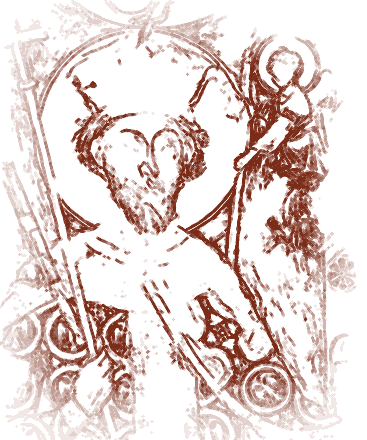
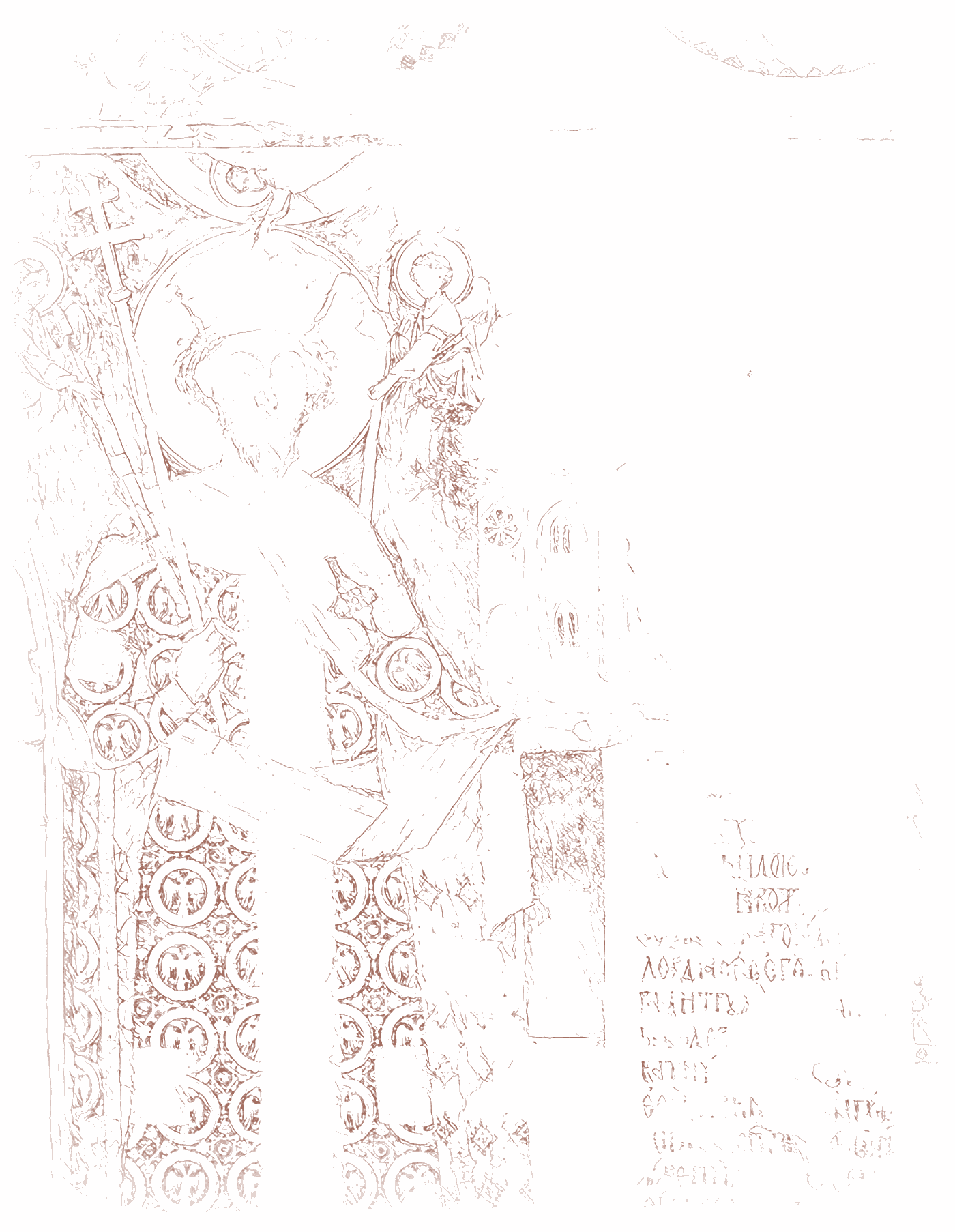
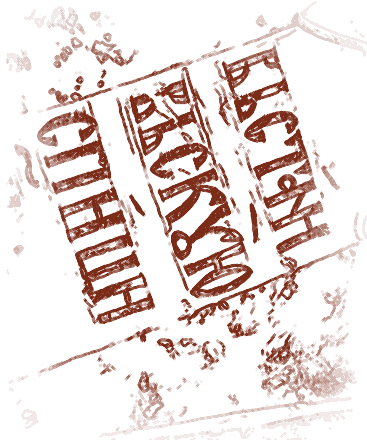
Beside the image of Despot Stefan Lazarević painted in the Church of Saint Nicholas in Brezova near Ivanjica, which is estimated to have been painted in the first half of the 17th century, two centuries after the Despot's repose, stands the title "Saint". In the holy Lineage of the Nemanjići painted in the Slavonian monastery of Orahovica in the 16th or 17th century, there is also the image of Saint Despot Stefan.
According to Leontije Pavlović, the cult of Despot Stefan among the Serbian people existed from the 16th century. On the other hand, the research of S. N. Smirnov on the cults of Serbian saints in Russian manuscripts shows how the cult of Saint Despot Stefan was transmitted into the Russian milieu. His Life was entered into Russian manuscripts, and it was copied for the Trinity-Sergius Lavra as early as the 15th century (manuscript no. 686, fol. 171–215), for the Volokolamsk Monastery in the 16th century (manuscript no. 307, fol. 221–410), for the Pochaiv Lavra in the 16th century (manuscript no. 47, fol. 216.b), and for the Solovetsky Monastery in the 17th century (manuscript no. 634, fol. 210). The cult of Saint Despot Stefan existed not only in Serbian but also in other Slavic milieus. According to Leontije Pavlović, the date of the commemoration of Saint Despot Stefan was regularly recorded in Russian and Czech menologia, which shows that he was venerated as a saint not only among the Serbs.
Stefan's Life was also entered into the collections of saints' lives compiled in Russia in the past. Thus in the middle of the 19th century the Russian church historian Andrei N. Muravyov (Андрей Николаевич Муравьёв, 1806–1874), in the collection that he edited and published in Saint Petersburg in 1856 under the title Lives of the Saints of the Russian Church, and Also of the Georgian and Slavic Saints, included "The Life of the Holy and Righteous Stefan the New, Despot of Serbia". Muravyov dated the commemoration of Saint Despot Stefan Lazarević to October 9. Because of ambiguities in the literature he made use of, he also introduced into his edition of the Life certain details from the life of the last Serbian despot, Stefan Branković - Saint Stefan the Blind (1420–1476); in later editions he corrected the text of the Life.
Several years later, in the collection of the lives of the saints published under the title The Saints of the South Slavs, edited by Saint Archbishop Filaret Gumilevsky of Chernigov (1805–1866), a renowned theologian and church historian and one of the most learned hierarchs of the 19th century, the commemoration of Saint Despot Stefan was also included, dated to July 19, under the title "The Repose of the Blessed Stefan Lazarević, Despot of Serbia".
Somewhat later, the commemoration of the Holy Despot was also included in the collection of the lives of the saints published under the title Lives of the Saints Venerated in the Orthodox Church. The commemoration of Saint Despot Stefan was at times entered into hagiographical collections together with the commemoration of his mother, Venerable Evgenija / Efrosinija - Milica, as is the case in the later, posthumously published collections of the lives of South Slavic saints by Archbishop Filaret.
In Russia the Life of Despot Stefan was included even in Roman Catholic hagiographical collections. Thus the Russian Jesuit Ivan M. Martynov (Иван Михайлович Мартынов, 1821–1894) wrote a Life of the Holy Despot in Latin, and in 1863 published it in the hagiographical collection printed under the title Annus ecclesiasticus Graeco–Slavicus.
According to the liturgist Lazar Mirković, the people venerated Despot Stefan the Tall as a saint even before his official canonization in the third decade of the 20th century. The cult of the Holy Despot existed not only in the regions of Upper and Lower Resava, that is, not only in the surroundings of Manasija Monastery, but also in other Serbian lands. The people believed that the Despot's burial place was located in Manasija Monastery, that is, that his relics were located in the monastery church. In the church itself, where the Despot's grave was supposed to be, the walls were completely blackened with soot from the candles that the pious people lit at that place. In Manasija Monastery, even before the canonization, the monks regularly commemorated Despot Stefan as a saint at the dismissals of the services. In the testimony of the Despotovac priest Radić, recorded by Mirković, we read:
"The people deeply believe that prayer at the Despot's grave in the church of Manasija helps, and the sick come from great distances and are brought to the grave of Despot Stevan, and lie upon it, regardless of whether it is winter or summer, in the hope that they will surely be healed, and they return to their homes with faith in a speedy recovery."
As the research of Danica Popović shows, in Serbia the initiative for the canonization of Saint Despot Stefan was inspired and launched by the diplomat and historian Stojan Novaković (1842–1915), and it was supported by Čedomilj Mijatović (1842–1932). The question of the official canonization of the Holy Despot was raised by the Metropolitan of Belgrade (later Patriarch) Dimitrije Pavlović (1846–1930), who proposed his official canonization to the Holy Assembly of Bishops of the Kingdom of Serbia in 1907 and again in 1912; however, unfavorable internal and wartime circumstances postponed this question until 1924, when it was raised once more. Although unanimity was not reached in the Assembly on this question, Patriarch Dimitrije wrote a service to the Holy Despot and at the vigil of July 19, 1927, solemnly proclaimed Despot Stefan a Saint.
According to the words of Patriarch Dimitrije, spoken in the Cathedral Church of Belgrade at the first official celebration of Saint Despot Stefan in 1927, the grave of the Holy Despot became after his repose "a true national shrine", while in the church of Manasija "a great multitude of people gathered for prayer" at the Holy Despot and "kissed him as a saint". The Patriarch underscored in his homily that the glorification of Saint Despot Stefan Lazarević was nothing new - for now, through the officially established church feast, the Despot is glorified "just as the soul of the people glorified him for a full five hundred years".
The Patriarch saw in the revival of the cult of the Holy Despot no innovation, but a renewal; hence it is more fitting to speak of the renewal of the cult of Saint Despot Stefan in the Serbian Orthodox Church than of his canonization in the 20th century. In this sense Saint Justin Popović (1894–1979) also expressed himself in the Life of the Holy Despot, noting the following:
"Not long after the death of Saint Despot Stefan, the day of his holy commemoration began to be celebrated, and his name as a saint was entered already in the 16th century into the Serbian, Russian and Czech Menologia. The Serbian Patriarch Dimitrije once again made official the inclusion of St. Stefan Lazarević, Despot of Serbia, in the calendar in 1927. And thus St. Despot Stefan the Tall is glorified in the Synaxis of All Serbian Saints..."
According to the research of Bishop Sava Vuković of Šumadija (1930– 2001), of blessed memory, when on July 19, 1927, in the Cathedral Church in Belgrade, Patriarch Dimitrije announced the canonization of Saint Despot Stefan, on the same day Bishop Mitrofan of Braničevo (Rajić, 1873–1930), in the Despot's endowment, that is, in Manasija Monastery, served the first service to Despot Stefan.
The troparion and kontakion, as well as the Service to Saint Despot Stefan, were written by Patriarch Dimitrije before the canonization, probably relying on Russian sources. At the canonization in 1927, this service was reproduced lithographically, as Radovan Pilipović states. The Service to Saint Despot Stefan associated with the name of Patriarch Dimitrije was published in the Srbljak of 1986. A Service to Saint Despot Stefan was also written and published in 1969 by Protopresbyter Mirko R. Pavlović (1900–1977).
Besides the troparion and kontakion written by Patriarch Dimitrije, a rather lengthy troparion to the Holy Despot was written by Saint Bishop Nikolaj Velimirović (1880–1956), on the feast of the Holy Despot, July 19/August 1, 1943, during the Second World War, while he was held captive in the monastery of Vojlovica. Perceiving that this troparion was perhaps too extensive, Saint Bishop Nikolaj later set apart the second part of the troparion as a kontakion. All three troparia to Saint Despot Stefan - from the pen of Patriarch Dimitrije and of Bishop Nikolaj (both the longer and the shorter version), and the two kontakia from the pen of the same authors, were published by Bishop Sava of Šumadija. There are also a troparion and a kontakion to the right-believing Lazarevići, and there are likewise numerous prayers to Saint Despot Stefan. In 2003 Mirko I. Nanić wrote an Akathist to Saint Despot Stefan Lazarević.
The Service to Saint Despot Stefan is found in contemporary liturgical books in the Srbljak and the Menaion. The Service to the Holy Despot is also printed in the liturgical books of the Russian Orthodox Church. The liturgical commemoration of the Holy Right-Believing Despot Stefan the Tall Lazarević is celebrated today throughout the world, on all continents. On the other hand, pilgrims from all parts of the world come to his holy relics, which today rest in a reliquary in the Church of the Holy Trinity of Manasija Monastery.