
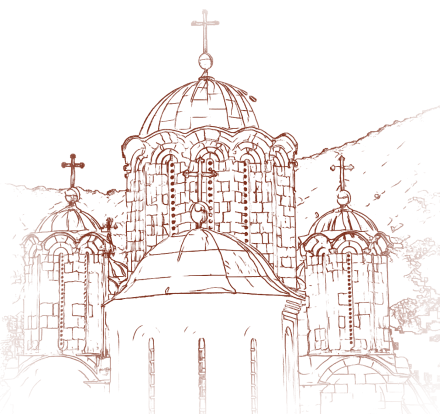
The church, which the people also remember as the Vrbovac Church, arose on the site of the former village of Vrbovac, which was deserted and abandoned in the past because of Turkish oppression. The history of this region attests that as early as the 15th century the existence of a settlement with several households is mentioned here. In the Turkish census of 1467, among the inhabitants of Vrbovac there is mention of Radoje, a priest's son, that is, the son of an unnamed monk [BT 177], which points to the possibility that a spiritual refuge existed here even then. The very name of the place where the White Church stands, Prnjavor, evokes associations with monastery land, which further strengthens the conviction that this ancient house of prayer was connected with Manasija Monastery. Tradition relates that this church was raised at the same time as the glorious Manasija Monastery, at the beginning of the 15th century, in the age of the right-believing Despot Stefan Lazarević. Although there are no reliable historical sources for this tradition, the very architectural fabric and artistic expression of the White Church at Beljajka, in their harmony and lofty simplicity, undeniably recall the smaller churches from the time of the Serbian Despotate. This closeness to the style of that age allows us, with good reason, to accept the folk tradition as probable.
The architecture of the White Church reveals a kinship with the smaller churches built in the age of the Serbian Despotate. The construction beneath the dome of this ancient church, resting on corbels, is very similar to the solution applied in the Church of the Holy Archangel Gabriel at Borač.
The Church of the Holy Archangel Gabriel at Borač was built during the 14th century and renewed in the 15th century, while the frescoes of this Borač church were painted in 1553. These similarities led researchers to suppose that the White Church too arose within a similar time frame - that is, in the 15th century.
There is one more similarity between these two churches - in both an inscription has survived about the renewal and later painting. The Church of the Nativity of the Most Holy Theotokos at Beljajka was renewed and painted with frescoes at the end of the 18th century, as attested by the surviving inscription located in the lunette on the west wall of the nave of the church, above the door leading from the narthex into the nave. This inscription indicates 1796 as the year of the renewal and painting. According to this testimony, the Church of the Nativity of the Most Holy Theotokos at Beljajka was renewed in the time of Metropolitan Metodije of Belgrade (†1801), the superior Protopresbyter Ilija and the Oberknez Petar.
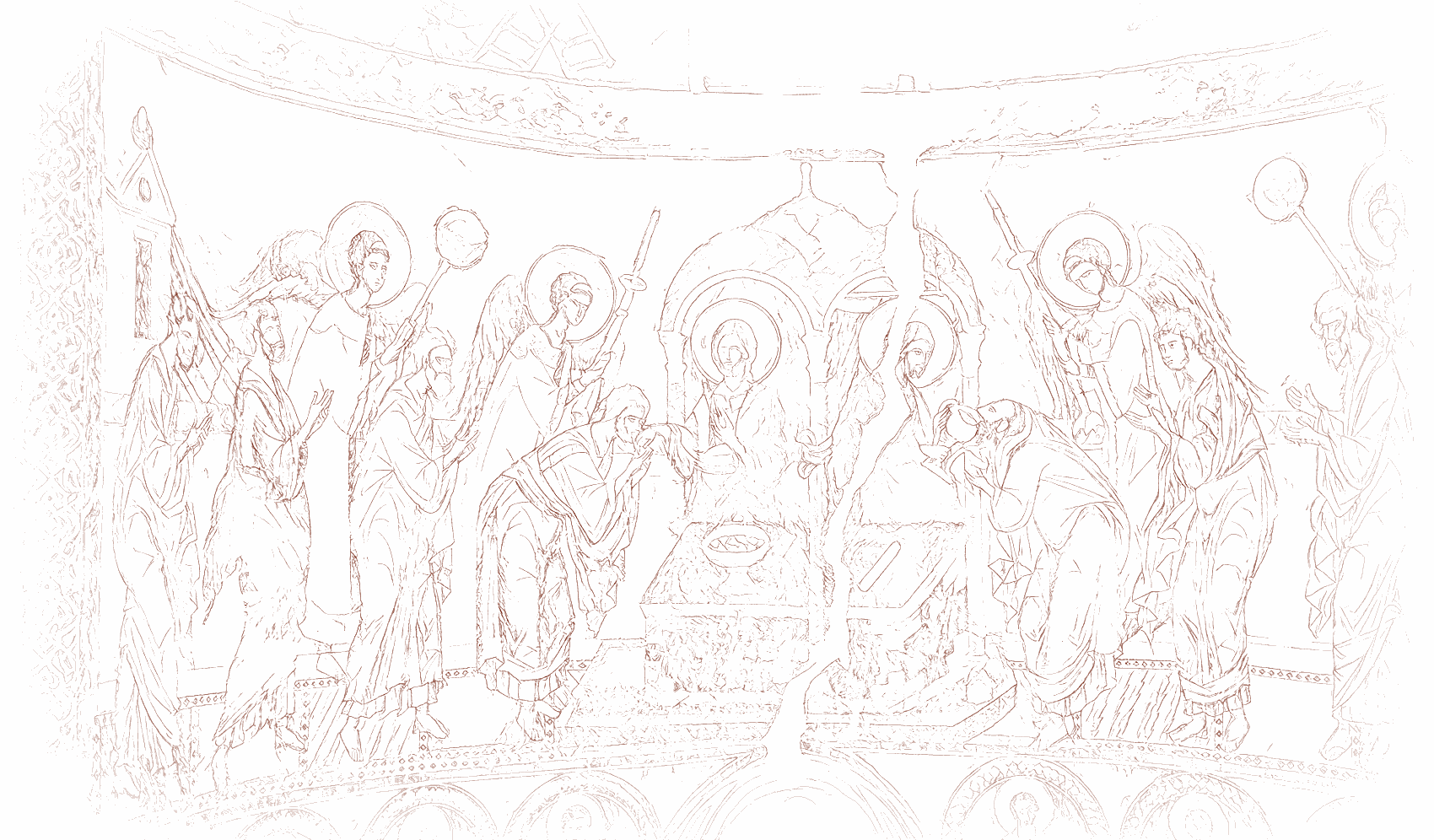
The frescoes painted at that time, of which the depictions of Christ giving a blessing (at the crown of the vault above the door connecting the narthex and the nave), King David and King Solomon have survived, have retained their beauty through the centuries. The figure of the Holy Archdeacon Stephen is painted in the portal, on the right side of the door; in the fresco he holds in his right hand a censer with glowing incense, while in his left hand, with which he holds his orarion, he holds a model of a church.