

Despot Stefan Lazarević
The Life of the Holy and Right-Believing Stefan the Tall, Despot of Serbia
Page 42 of 44
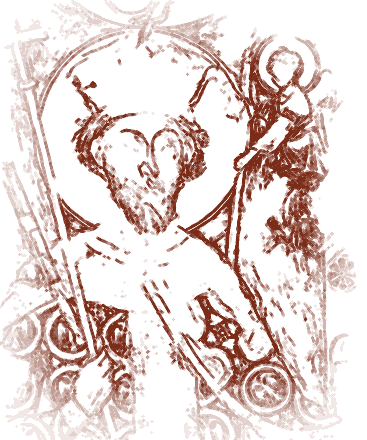
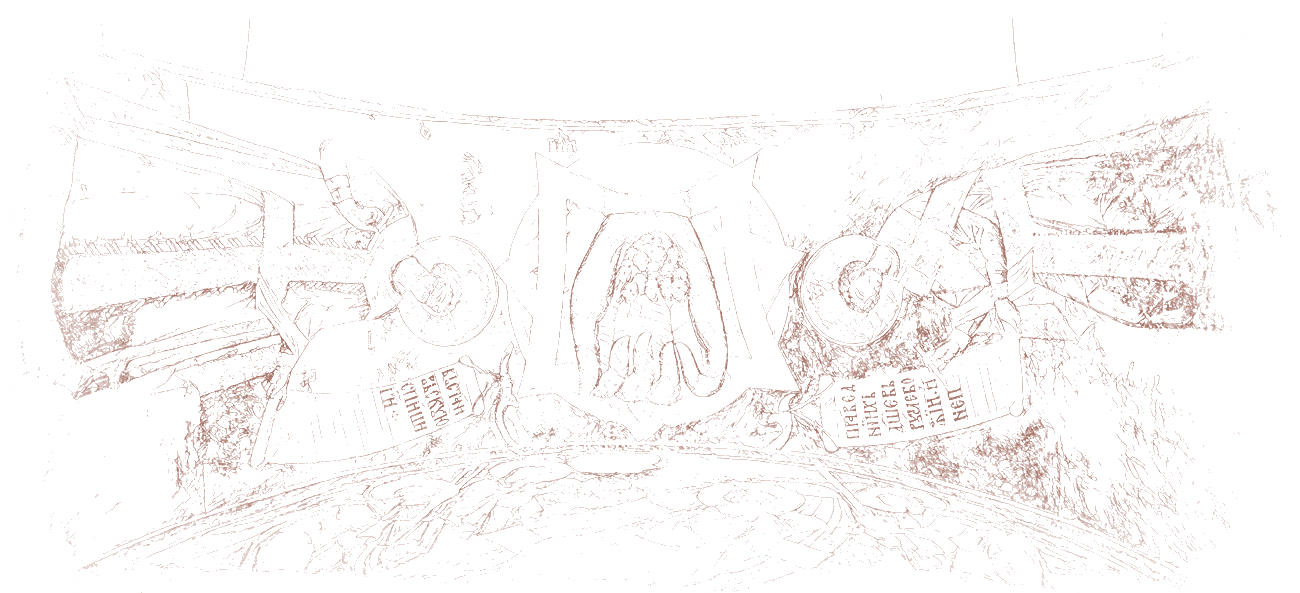
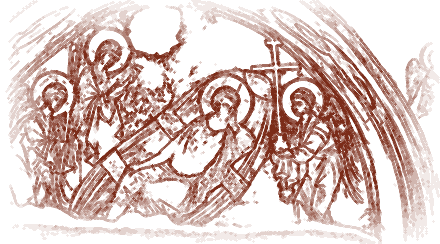
and has fallen. Together with you the earth too weeps and sobs, for it must receive into itself him whom it did not hope to receive so soon. For this wondrous and mighty Despot, who shone forth in our days, was not allowed to draw near even to the fiftieth year of his life, nor to the fortieth year of his reign; but for him, who was great and the seal of Christians, the circles of life and death were ordered by Him Who wisely orders all things, Who brought the Despot’s repose to the six thousand nine hundred and thirty-fifth year (that is, to 1427). And that was such a time as was like that time of which it is said: ‘Behold, here is fear and great sorrow throughout the world.’” “Yet, having come to the end of this Life of the Holy Despot Stefan as to a quiet harbor, let us take courage from our faintness and sorrow for him and cry out to him thus: Rejoice, good fulfiller of the divine commandments! Rejoice, radiant ruler of an earthly kingdom and heir of the heavenly! Rejoice, terrible and lightning-swift arrow to the disobedient! Rejoice, sweet obedience to the well-obedient! Rejoice, David meek in counsels! Rejoice, new Solomon in wise affairs and deeds! Rejoice, ineffable keeper of the secret of almsgiving! Rejoice, renowned, greatly generous and open right hand! Rejoice, good adorner of divine temples! Rejoice, radiant adornment of imperial houses! Rejoice, you who gathered in yourself all that is most beautiful in man! Rejoice, adornment of rulers, Despot Stefan! Glory to Him Who gave you in the last times as a praise to Christians! Glory to our God, Who does great and wondrous works, Who from generation to generation reveals many chosen luminaries, that in the last generations the unspeakable and wondrous works of our God may be made manifest, to Whom be glory through all ages. Amen.” The holy body of St. Stefan, Despot of Serbia, was laid, as has already been said, in the narthex of the church of his endowment, the monastery of Manasija. It still rested there in 1597, as is seen from a letter of the monks Damnjan and Pavle from Serbia, addressed that year to Pope Clement, in which, among other things, they state that Stefan’s “holy body is in Resava.” The monastery of Resava, however, was many times plundered and burned by the Turks, and the narthex of the church was once even completely destroyed by the Austrians. Therefore the tomb of St. Stefan is empty today.* But the devout people from the beginning until today come to his holy tomb at Manasija and lay their sick there to obtain healing, which indeed comes to pass according to the measure of each one’s faith. Not long after the death of the Holy Despot Stefan the day of his holy memory began to be celebrated, and his name as a saint was entered already in the 16th century into the Serbian, Russian, and Czech menologia. The Serbian Patriarch Dimitrije officially confirmed anew the inclusion of St. Stefan Lazarević, Despot of Serbia, in the calendar in 1927. And so the Holy Despot Stefan the Tall is glorified in the Synaxis of all the Serbian Saints. Some time after the death of the Holy Despot Stefan, his nobleman Đurađ Zubrović, in whose district the Holy Despot had reposed, raised at the place of the Despot’s repose a memorial stone, about 2 meters high, of white polished marble. This stone still exists today and stands in the churchyard in the hamlet of Crkvine (formerly called Drvenglava), between the villages of Markovac, Stojnik, and Međulužje, in the vicinity of Mladenovac. On that stone stands this inscription from that time: “I, Despot Stefan, son of the Holy Prince Lazar, and after his repose by the grace of God lord of all the Serbs and of the Danube lands and the Sava lands and of part of the Hungarian land and the Bosnian, and also of the Littoral of Zeta. And in the God-given authority