



Despot Stefan Lazarević
The Life and Deeds of the Ever-Remembered Despot Stefan
Page 27 of 50
densely peopled. Yet however much (the city) grew, it was not enough for the bountiful (Despot). From his own lands too he enrolled and gathered (people), as Nehemiah (had done).91 And more than (all his other) cities the (Despot) guarded this (city) and furnished it with all that was needful, for it was the imperial residence. And all the days of (his) life this city was enlightened and grew, so that to it, as to Jerusalem, it could be said: "Lift up thine eyes round about, and behold: all these gather themselves together..."92 So much for that.
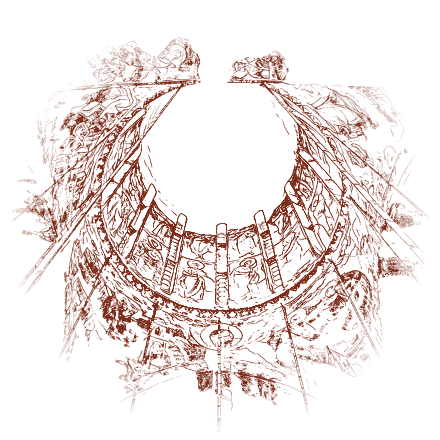
52. It is time for us to make mention of another city as well, one which has a path toward the Jerusalem on high and is like unto it. (Despot Stefan) had an immense desire to converse with hermits and gladly kept company with them. For when this divine love takes hold of anyone, it upholds and exalts him; he rejoiced (in the hermits) and received them well (bestowing gifts upon them), better than Croesus (did), from his many treasuries (in which were) golden vessels and goblets, and he strove that they should always be with him. Knowing that silence is the precondition for each to receive the great honor of (being able) to grow and to contemplate spiritually, he went about the mountains, fields and wildernesses seeking (a place) where he might raise a monastery, a house of silence. When he had found the most fitting and best place where (that) house ought to be, he prayed, set his hand to the work and laid the foundation in the name of the Holy Trinity, the all-sustaining Godhead. And everywhere, with great haste, (finding) skilled and the best builders and experienced painters, wherever (they) were to be found, he adorned (that monastery) with gold (ornaments) and floral patterns. He sent (for masters) everywhere, even to the islands. (This monastery) was built at many and enormous costs, and (that) house and the city around it were adorned - (these were) excellent dwellings for the cenobitic life.93 He gathered from all sides most wise and outstanding monks and settled them there. He endowed and gave (the monastery) villages and vineyards throughout all his land (and) (confirmed it) with his signature. Here, day by day, he laid up treasures. There he also made for himself a tomb, wherein he was soon laid. He donated precious icons adorned with pearls and gold, furnished (it) with various liturgical books, vestments and church vessels, (likewise) gilded and adorned with great pearls, surpassing even the chosen great lavras on Mount Athos. Those too /the Athonite lavras/ he adorned with many-lighted lamps shining (with) gold. And what should be mentioned first (of all) that he brought here and adorned?! And the God-chosen rite /order/ of the Lord's Supper he ordained to be performed (here) with great honor, becoming (thus) like unto a seraph.94 He summoned also the patriarch - this was then Kirilo - with the whole council of the Serbian
- Nehemiah, a Jew who was a captive of the Persian king Artaxerxes; he won the king's favor and became his bodyguard. In the year 445 before Christ the king allowed him to return to Jerusalem and to become governor of Judea. Having returned to his homeland, he undertook to rebuild the ruined walls of Jerusalem, as well as to root out various bad customs among the city's inhabitants.
- Isa 49:18. In Constantine... instead of "... and behold: all these gather themselves together..." we read: "...and behold thy children gathered together."
- The cenobitic life (koinonia) is a form of monastic life whose originator was St. Pachomius (early 4th c.), an Egyptian, a disciple of St. Anthony the Great. On the bank of the Nile, at Tabennisi in Upper Egypt, he founded the first monastic community. The monks lived in a koinobion (cenobium), i.e., a house for common life. St. Pachomius was thus the founder of coenobitic monasticism, also giving definite rules (a typikon) for monastic life.
- Seraph, i.e., seraphim (in the plural); they are one of the nine orders of the heavenly hierarchy; they are depicted as six-winged spiritual beings who surround the throne of the Lord, singing without ceasing: "Holy, holy, holy, Lord of Sabaoth!"