

In all likelihood, people could once have said: 'there, where Manasseh is...', meaning the popular despot, until such a designation passed from his grave to the whole monastery and town..." The Serbian church historian Radoslav M. Grujić (1878–1955) held that the Resava endowment of Saint Despot Stefan the Tall was "later named after his poetic epithet Manasseh"; in this way the connection is underscored between the monastery of Resava and its holy founder, whom the old writers call "the Serbian Cyrus ..., a Manasseh in sweetness of speech and a Ptolemy in love of books...", as Grujić observes. The Serbian historian Miodrag Al. Purković (1907–1976) cites two different opinions concerning the origin of the name of Manasija Monastery - that the monastery of Resava received the name Manasija after the lively literary activity carried on within it, but also the opinion that
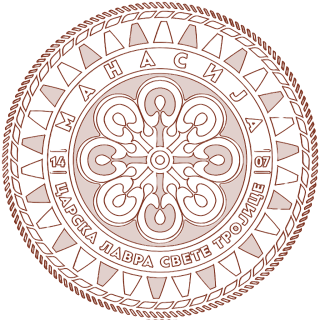
the monastery received its name after the fortress that surrounds the church, perhaps on the model of certain Western buildings, which was advocated by S. Radojčić. There are also claims that the name Manasija arose from the name Namasija, that is, from Namastir. There are also various other conjectures and suppositions; considerable, however, is also the number of those authors who, like Evgenije Simeonović (1815–1880), Archimandrite Ilarion Ruvarac (1832–1905), the academician Stanoje Stanojević (1874–1937) and others, consider that it is not certain since when and for what reason Manasija Monastery bears this name. It should be mentioned that there are also certain entirely arbitrary and frivolous claims regarding the origin and meaning of the name of Manasija Monastery. Some of them were criticized by Ilarion Ruvarac in the century before last and by Stanoje Stanojević in the last century, but such suppositions and claims based on folk etymology and pseudo-etymology arise even today; in recent times Professor Radivoj Radić has specifically addressed this phenomenon in his critique (according to whose words such "jocular etymologies, far from any scholarliness, are at the very least frivolous"). In any case, the problem of the name of Manasija Monastery eludes our knowledge. Perhaps the discovery of some new sources in the future will shed light on the origin of the name of Manasija Monastery, which, however, for the time being remains open and a subject of debate and research. What we can know with certainty about the name of the monastery, however, is that, despite the claims of some researchers, the name Manasija was not introduced by the monk Jevrem ("deacon Jefrem" in some authors) in the course of 1736. Even if the oldest known mention of the name of Manasija Monastery were the one from the copy of the book of the Miracles of the Most Holy Theotokos from March 1736, made by the monk Jevrem [SSZN 2674], the question arises how a single monk, or a single monastery hierodeacon, could change the name of so renowned and significant a monastery, a ruler's endowment? The name is certainly older than 1736, and it had become official at the latest in 1727 - as inscribed on the monastery's seal: the oldest surviving known impression of this seal of Manasija Monastery is dated to the month of June 1727. However that may be, the origin and genesis of this name of the monastery of Resava are shrouded in a veil of mystery.