

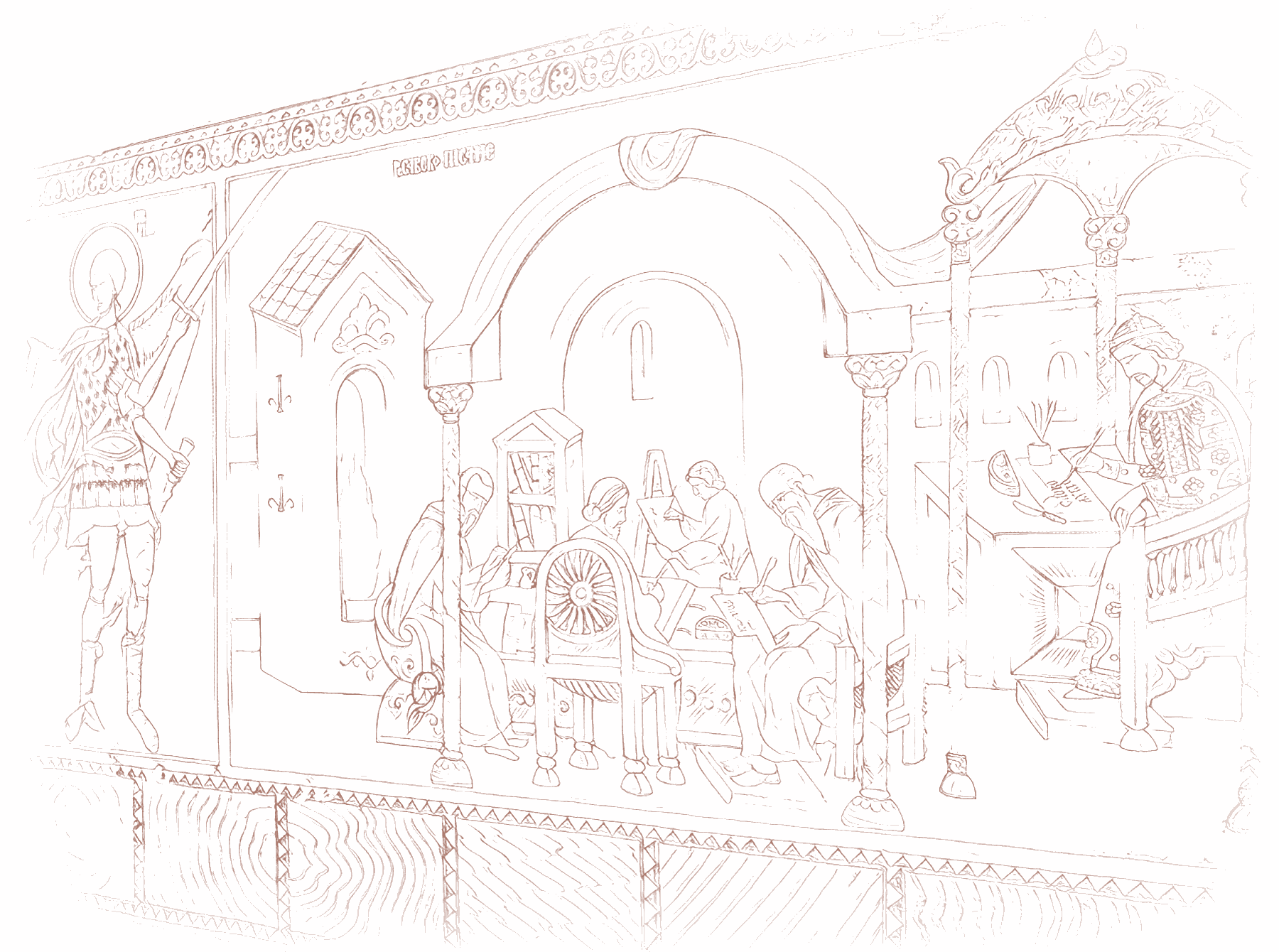

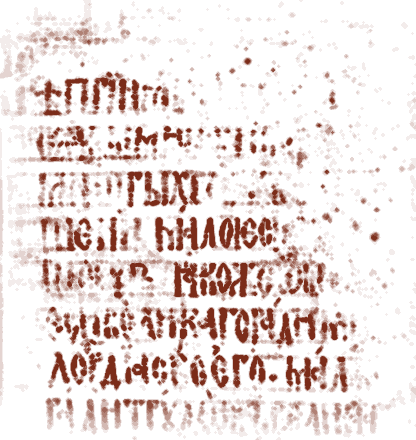
scholarly circles is also known by the name Paralipomenon. In the note he added to his copy, Gregory praises Despot Stefan as an exemplary protector of literature and learning. The ruler of the Serbian lands, the great Serbian autocrat Despot Stefan, says Gregory, takes care for that which is profitable to the soul, and gives divine books to his people, desiring "by their surpassing wisdom to adorn manners and speech, and by their grace to enlighten the soul and draw it toward the knowledge of God" [SSZN 4953]; the Despot cared so much for books as though he had no other cares or affairs at all, the learned editor observes. The Hilandar monk Gregory also gives concrete orthographic instructions for the copying and correcting of texts, which further underscores the importance of accuracy and care in working with books. In his commentaries, Gregory shows a deep reverence for the classics, while at the same time expressing a rare critical sense and an erudite striving toward the study of ancient culture. His work testifies to the birth of interest in the ancient tradition in the Serbian medieval lands and to the cultural renewal led by the pious Despot Stefan. Himself a man of letters and an inspired poet, Despot Stefan also actively contributed to literature, and may be regarded not only as the instigator but also as one of the key figures of the Resava literary renaissance. In this sense, the Karlovci Genealogy writes of the Despot that "he translated many writings from Greek writings, more than others who were before him" [SSRL 31]. It is possible that it was Despot Stefan himself who translated from Greek the work On Future Times (between 1400 and 1407), and his best-known original work, the Homily on Love (written at the beginning of the 15th century), represents the summit of Serbian medieval poetry. This poetic text, in the form of an epistle, written in acrostic, not only refreshed Serbian literature in terms of genre, but by its theme and its warm, serene tone foreshadowed the spirit of the Renaissance. The Homily on Love is a hymn to love - spiritual, brotherly, but also to love in general, and it is regarded as one of the most beautiful works of Serbian poetry of that age. Another significant work of Stefan's is the Inscription on the Kosovo Marble Pillar (most probably written between 1402 and 1404), a solemn epitaph set up at the place where the Serbian and Turkish armies collectively perished on the Field of Kosovo [SSZN 4946]. This dramatic, heroic text represents an exalted echo of the Battle of Kosovo and a testimony to a profound national tragedy. The Despot is possibly the author of the Funeral Lament for Prince Lazar, of which only a few verses have been preserved, as well as of several rhetorical preambles to charters, such as the one written for the Monastery of Hilandar. By these works Stefan Lazarević inscribed himself in the history of Serbian literature as a deeply educated, charismatic and visionary ruler, who in his creative work united the medieval tradition with a foreshadowing of the Renaissance spirit. A large number of notes have been preserved that testify to lively literary, copying and translating activity in the Serbian lands during the life of Saint Despot Stefan, such as the copying of liturgical books for the Monastery of the Most Holy Theotokos at Radešina (whose founder was the voivode Radoslav Mihaljević) [SSZN 244]; such a testimony is also the note in the Apostolos of the Monastery of Saint Demetrius at Suha Reka (Sušica), near Skopje, which the scribe Aksentije completed at the Despot's
Manasija Monastery · Imperial Lavra of the Holy Trinity

Manasija
loading the page