



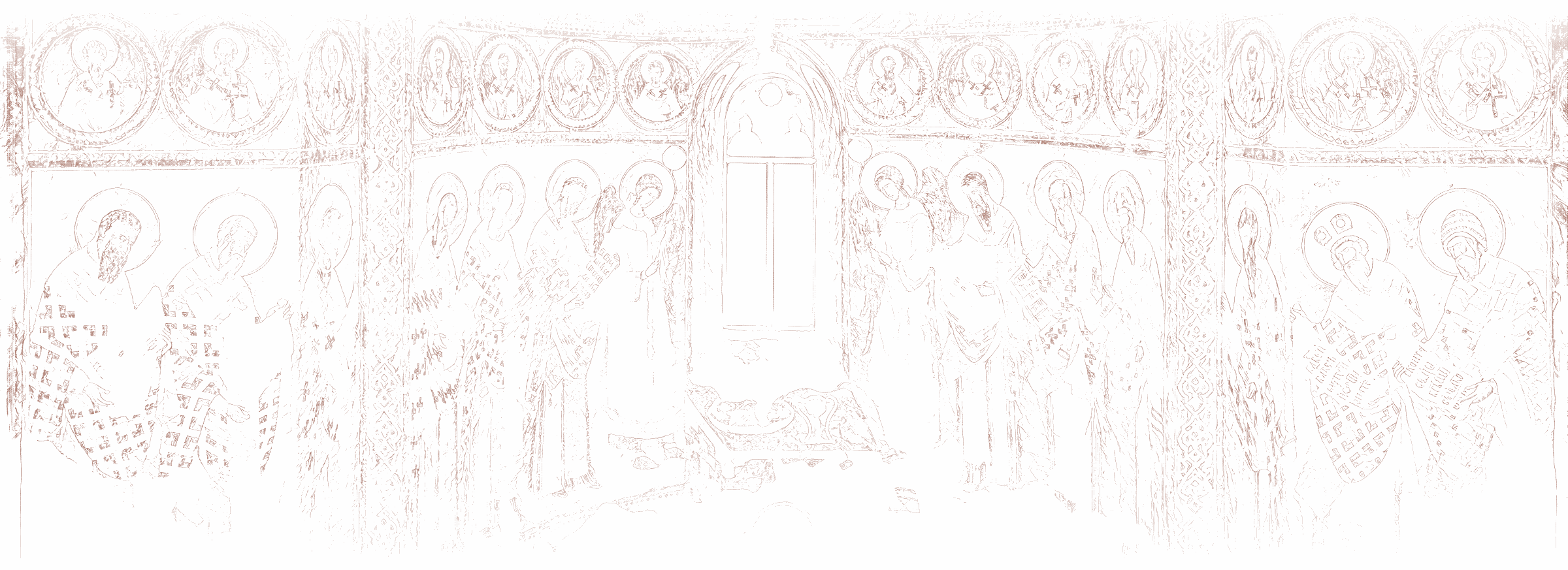
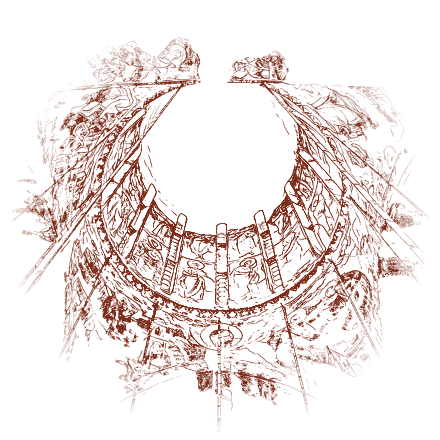
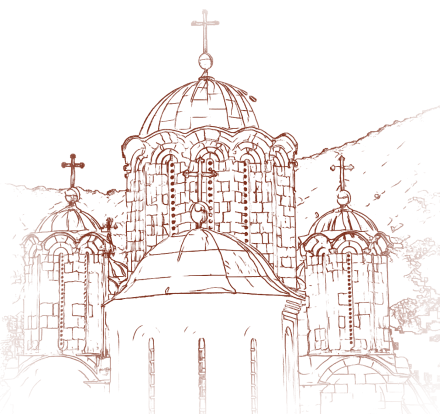

there remain preserved monumental compositions and figures of saints, which reveal the original arrangement of themes and their order by zones. The painting of Manasija Monastery stands out for its sumptuous coloring, elegance and powerful spiritual message. Stylistically, the frescoes of Resava are related to earlier works in the narthex of the Church of the Holy Prophet Elijah in Thessaloniki and in the Chapel of the Holy Unmercenaries Cosmas and Damian in the Monastery of Vatopedi. They show the supreme artistic achievement of the masters of Thessaloniki, who were trained in the finest traditions of Romaic art. This was noted by Serbian art historians, who therefore supposed that the painters who frescoed the Church of the Holy Trinity came from Thessaloniki. Certainly, as Constantine the Philosopher also testifies, Despot Stefan gathered the finest artists from the entire Byzantine artistic sphere to adorn Manasija Monastery, which resulted in frescoes of extraordinary artistic value. The Despot's vision and patronage made possible the creation of this masterpiece, which represents the summit of medieval art, making it an exceptional testimony to the cultural greatness of Morava Serbia. The frescoes are arranged in accordance with the architectural concept and the sacred function of the church. The sacred arrangement and the artistic expression of the frescoes transformed the interior of the church into a space of spiritual beauty: for believers, the Church of the Holy Trinity at Manasija symbolically leads us into the divine world, into a foretaste of the Kingdom of God, in which cosmic order and harmony reign. The radiance of the colors, the elegance of the figures and the compositional accomplishment of the frescoes contribute to the experience of an exalted spiritual encounter.
The Frescoes in the Altar Space
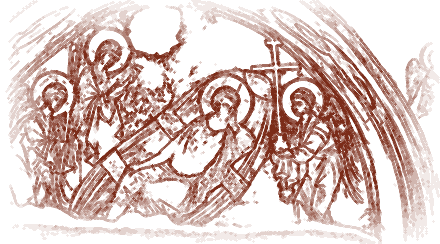
The most complete part of the painting of the church of Manasija preserved to this day is in the altar. The preserved frescoes bear witness to the high artistic and theological achievement of the Serbian Middle Ages. On the face of the arch around the semi-dome of the apse was inscribed a verse from Psalm 25:8, “O Lord, I have loved the beauty of Thy house,” which emphasized the sacred significance of the space. In the semi-dome was depicted the Most Holy Theotokos with Christ in her lap, while the Divine Child is surrounded by angels bowing down before Him: of this composition only parts of the angelic figures have survived and can be made out today. Below the semi-dome are scenes from the cycle of Christ's appearances after the Resurrection, programmatically conceived as a visualization of liturgical texts. This cycle emphasizes Christ's role as Teacher and Savior who hands on His message and mission to the apostles. On the north side of the altar the Apostle Peter is depicted at the empty tomb of Christ: Peter stands beside the open tomb, and in the tomb only the linen cloths in which Christ had been wrapped are seen (Luke 24:12). There follows the scene in which Christ shows the apostles His hands and feet, on which the wounds of the nails are visible